Security | Threat Detection | Cyberattacks | DevSecOps | Compliance

The problem? The people you're blocking are often top performers.

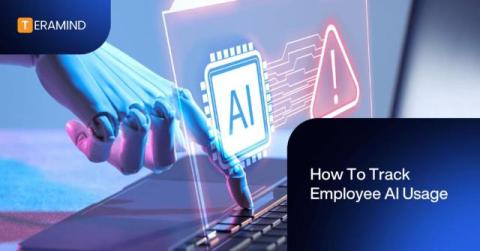
Banning AI seems logical. Our new report shows why it's failing. The problem? The people you're blocking are often top performers. They're confident, innovative, and willing to work around the rules to get value. This video explains why this paradox changes everything. You can't just block curiosity. You have to harness it. Download the complete (ungated) report.

2026 Security Predictions

As cyber threats evolve at an unprecedented speed, 2026 promises to be a transformative year for cybersecurity. Traditional threats are giving way to more sophisticated strategies, driven by AI, regulatory pressures, and the need for zero trust. In this webinar, CSO Corey Nachreiner, Director of Security Operations Marc Laliberte, and Field CTO for Managed Services Adam Winston will discuss their six game-changing predictions for this upcoming year, including.

Adversarial AI: The New Symmetric Threat Landscape

Adversarial AI is geometrically making cyber a symmetric threat, fundamentally altering the cybersecurity equation. However, there are leaders who have successfully navigated these emerging challenges and understand the implications. Join Dr. Aleksandr Yampolskiy (CEO & Co-Founder, SecurityScorecard) and Dr. Srinivas Mukkamala (CEO, Securin Inc.) as they dive into: SecurityScorecard monitors and scores over 12 million companies worldwide.

PII Detection in Unstructured Text: Why Regex Fails (And What Works)

Let’s look at something many teams quietly struggle with. Detecting PII inside unstructured text. It feels like it should be simple. After all, we’ve used regular expressions for years to find emails, phone numbers, and ID formats. Yet when we deploy regex in real environments. ticket systems, chat logs, CRM notes, uploaded documents, support transcripts. something becomes clear very quickly. Regex isn’t enough.

Why You Shouldn't Ignore OS Updates Even for "Small" Bugs

Why You Shouldn’t Ignore OS Updates Even for “Small” Bugs In cybersecurity, people often focus on the big, headline-grabbing incidents: ransomware outbreaks, nation-state intrusions, or massive supply chain compromises. But the reality is far simpler: Most breaches begin with something small: a patch that wasn’t applied, a “low-priority” update that got postponed, or a seemingly harmless system bug that attackers quietly weaponized.

AI-Native Browsers Demand AI-Native Security: Why Legacy DLP Can't Protect You

In our recent analysis of AI browser exfiltration risks, we exposed how OpenAI's Atlas and Perplexity's Comet create permanent backdoors to sensitive data through persistent memory, autonomous agents, and cross-platform sync. The challenges with AI native browsers strongly resonated with CISO’s and security leaders we speak with on a daily basis. But the threat extends far beyond Atlas and Comet.

React2Shell and related RSC vulnerabilities threat brief: early exploitation activity and threat actor techniques

On December 3, 2025, immediately following the public disclosure of the critical, maximum-severity React2Shell vulnerability (CVE-2025-55182), the Cloudforce One Threat Intelligence team began monitoring for early signs of exploitation. Within hours, we observed scanning and active exploitation attempts, including traffic originating from infrastructure associated with Asian-nexus threat groups.

Why I'm leading Tines' internal workflow transformation

I first met Tines co-founders Eoin Hinchy and Thomas Kinsella more than a decade ago at eBay. Even then, we shared the same frustration: too much important work was slowed down by brittle processes, manual handoffs, and disconnected tools. We all believed technology should help people focus on meaningful work, not slow them down in muckwork. That idea has shaped my career ever since. I started out in security operations, using automation to make my own job easier.