Security | Threat Detection | Cyberattacks | DevSecOps | Compliance

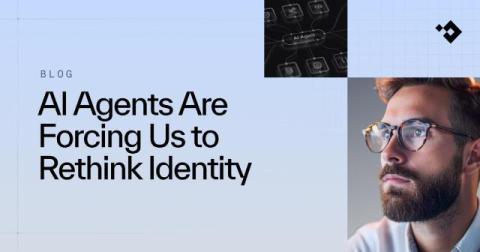
AI Agents Are Forcing Us to Rethink Identity

Since joining BlueVoyant in May, I’ve spent my first 100 days listening. I've had conversations with nearly 50 customers and partners across industries and geographies, as well as the broader security industry, engaging with leaders at Black Hat last month. What I heard reinforced something I believe strongly: the security challenges organizations face today are changing faster than the traditional enterprise security model was designed to handle.
Featured Post

Why Data Governance Has Become a Critical Defence Against Ransomware in Healthcare

Ransomware and ransomware-style attacks can have a catastrophic impact within healthcare, where disruption directly impacts safety and continuity. Today's ransomware groups increasingly operate as sophisticated criminal enterprises, sharing tools, infrastructure, and expertise through ransomware-as-a-service (RaaS) models. This lowers the barrier to entry for cybercriminals while allowing experienced threat actors to focus their efforts on identifying and exploiting high-value targets.
Featured Post

Why Annual Third-Party Cyber Risk Assessments Are No Longer Enough

As regulators tighten expectations and cyber attacks increasingly exploit supply chains, organisations must shift from periodic vendor assessments to continuous third-party cyber resilience. For years, third-party cyber risk management focused primarily on vendor due diligence and annual security assessments. The objective was simple: determine whether a supplier met an acceptable level of security at a specific point in time.

How BlueVoyant and Partners are Detecting Modern Phishing Campaigns Across the Full Attack Chain Utilizing Microsoft's UEBA Capabilities

Over recent months, our Microsoft Managed Detection and Response (MDR) service, powered by the Threat Fusion Cell, has observed a sharp increase in sophisticated attack campaigns attributed to offshoots of threat brand Vocal Brigantine, who ceased operations in Spring 2026.
Featured Post

How Geopolitics is Driving Modern Cybercrime

Ransomware attacks no longer rely on traditional encryption methods. With today's advanced technology, threat actors are developing 'encryption-less extortion', focusing solely on data exfiltration and the threat of leaking or selling stolen sensitive information. Often used as part of double and even triple extortion strategies, ransomware has now evolved into a fragmented, competitive, and increasingly strategic threat landscape that employs divergent attack strategies, laser-focused on high-value targets.

What Black Hat USA 2026 Confirmed About the Next Phase of Cyber Risk

Black Hat USA 2026 wrapped in Las Vegas with a clear verdict: the industry has stopped debating whether AI changes the threat landscape and started building for the fact that it already has. Nearly a third of the conference's briefings dealt directly with AI security, agent exploitation, or LLM-assisted offensive research — and the conversations happening in partner meetings and dinners around the show floor tracked right alongside it.

The First Place to Start Securing AI

Every enterprise is racing to adopt AI, and every security team is racing to keep up without becoming the department that says no. Most are still evaluating tooling built specifically for AI agents. But there's a faster, simpler starting point available today: the large majority of AI activity right now runs on behalf of a signed-in user, what we call “on-behalf-of” (OBO) access. Secure that identity well, and you've secured the AI acting through it.
Featured Post

Four Excuses That Are Leaving Your Data Exposed to AI Risk

The generative AI revolution isn't on the horizon. It's already reshaping the way your employees work. Across every industry, workers are adopting AI-powered productivity tools at a pace that far outstrips most organisations' security and governance programmes. The question is no longer whether your organisation will use AI, but whether you're prepared to use it securely. The challenge is real, but so are the misconceptions that keep organisations from acting. Let's break down the four most common excuses and explore what it takes to build a data security foundation ready for the AI era.