On August 27, Google sent us an email. We did not. We barely recognized the hostname. None of us had thought about dev-docs.trackjs.com in about ten years.
Accelerating security solutions for small businesses Tagore offers strategic services to small businesses. A partnership that can scale Tagore prioritized finding a managed compliance partner with an established product, dedicated support team, and rapid release rate. Standing out from competitors Tagore's partnership with Vanta enhances its strategic focus and deepens client value, creating differentiation in a competitive market.
Keeper Security, the leading zero-trust and zero-knowledge identity security and Privileged Access Management (PAM) platform, today announces an integration with SailPoint, a leader in identity governance, access and compliance. The Keeper SaaS Connector links SailPoint’s IGA platform directly to KeeperPAM. The integration allows SailPoint to control the provisioning, deprovisioning and entitlements of Keeper users, vaults and managed resources.
In March, we announced our first major post-quantum milestone. Customers using a compatible browser could negotiate X25519MLKEM768 when connecting to the 1Password web app. This protected browser traffic from harvest-now, decrypt-later attacks (HNDL) without any customer action required. While this release raised the bar, it did not cover other ways customers connect to 1Password.
Securonix Threat Research analyzed a script-driven Windows execution chain that begins with a desktop VBScript and deploys a redundant persistence framework under %LOCALAPPDATA%\WinDefendSvc.
Most people don't hesitate to run a free security scan because they doubt it'll find anything. They hesitate because they don't know what the results will look like. Will it be 40 pages of raw data without context? A sales pitch disguised as a report? We'll walk through it screen by screen so you know exactly what to expect before entering a domain.
The Hunt or be Hunted series tells the hunt stories. HuntIQ Tradecraft, now live on the Tanium Resource Center, gives you the playbooks to run them yourself.
The security team at a mid-sized insurer spent eighteen months hardening everything that faced the internet. They rotated credentials, tightened their identity provider, and ran tabletop exercises until the incident playbook felt routine. Then a contractor bought a pallet of decommissioned laptops at a regional auction and found four of them still booting into a cached domain profile. Nothing had been breached. The data simply walked out through the loading dock, on equipment the company had already stopped thinking about.
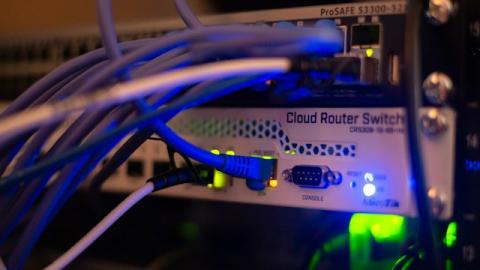
Our digital and physical worlds are now closely linked. This connection brings incredible efficiency, but it also creates new vulnerabilities. When digital systems control physical infrastructure, a security failure can have real, tangible consequences. Protecting your assets today means having a strategy that tackles threats in both these areas at the same time.
MovieReaper is a malware family first observed in September 2026 that combines remote-access trojan and loader functionality in a modular, multi-stage framework. It targets x86-64 systems and is built to reach remote machines, install additional components, persist across reboots, and exfiltrate data while resisting analysis through anti-sandbox, anti-VM, and AV-evasion features.