Security | Threat Detection | Cyberattacks | DevSecOps | Compliance

The Double Edge of AI in Healthcare: Guarding Data, Growing Empathy

Healthcare has always run on two currencies: information and trust. Patients hand over their most sensitive data, diagnoses, genetic profiles, mental health histories, on the assumption that it will be protected and that the people (or systems) handling it will treat them with care. Artificial intelligence is now reshaping both sides of that bargain at once.
The Autonomous Insider: Rethinking Insider Risk for the Agentic Era

Insider threat models have historically had one thing in common: somewhere in the chain, there is a person. That person may be malicious or negligent. Their credentials may have been compromised. Their actions may be intentional or accidental. But there is still a human principal at the center of the risk. Agentic AI is beginning to challenge that assumption.

Comparing Software Supply Chain Security Vendors: Key Criteria

If you’re comparing software supply chain security vendors in 2026, the market can feel deceptively crowded. Many platforms now claim broad coverage. Many specialists still lead in critical niches. And nearly every vendor can produce a long feature checklist. That is exactly why buyer discipline matters more than ever.

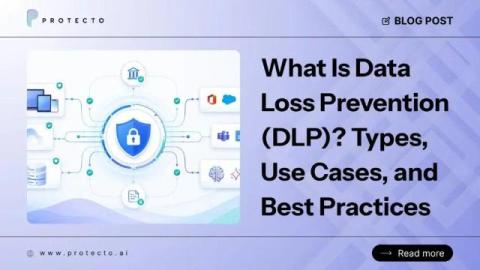
What Is Data Loss Prevention (DLP)? Types, Use Cases, and Best Practices

Protecting sensitive data is no longer just a compliance objective. It has become a prerequisite for adopting cloud services, enabling AI, and maintaining customer trust. Yet many organizations still struggle to balance innovation with effective data governance. A 2025 Forrester Total Economic Impact study commissioned by Microsoft found that organizations using mature data protection capabilities, including data loss prevention (DLP), achieved a 30% reduction in the likelihood of data breaches.

Cryptographic Context Injection - The 443 Podcast - Episode 384

This week on the podcast, we discuss a research post that defines a new attack technique against AI tools called Cryptographic Context Injection. Before that, we cover an authentication bypass vulnerability in CircleCI's MCP server after discussing 3.6 million records stolen from the Azure tenants of several large organziations.

How SAML SSO + SCIM Simplify Atlassian User Management Across Jira, Confluence, and More

Managing Atlassian Cloud access sounds simple until you’re managing hundreds of users with different IdPs across applications like Jira, Confluence, and more. You have to manually onboard users, assign groups, and revoke access at the right time. It’s very tedious, and if you miss a beat, you risk an ex-employee still having access to their Jira account, creating security concerns. Atlassian Guard provides a solid baseline for cloud security.

What is managed XDR (MXDR)? A complete guide for service providers

Security teams rarely lack alerts. The harder problem is working out which ones belong to the same attack — and doing it quickly enough to stop the damage. An endpoint tool may flag suspicious activity on a device. An identity platform may record an unusual sign-in. An email security product may spot a malicious message. When those systems operate separately, each one shows only part of the incident.

Coding Agents Just Reopened Your Software Supply Chain Blind Spot

Most organizations spent years hardening their software supply chain. The model is familiar: dependencies flow through a controlled repository, policies determine what is allowed, scanning catches what slips through, and every action is logged for auditability. It works because human developers operate within environments that enforce these rules. AI coding agents break that assumption entirely.