Security | Threat Detection | Cyberattacks | DevSecOps | Compliance

How to pass Cyber Essentials Plus - Danzell v3.3 Standard

KEEP helps organisations large and small to achieve both Cyber Essentials (CE) and Cyber Essentials Plus (CE+), alongside some of the more stringent standards such as SOC2, though for this insight we will focus on how to ‘pass’ CE+. As you may be aware IASME introduced the Danzell v3.3 standard in mid 2026, which included a number of critical changes that aimed to set the bar ‘higher’ for an organisation who applied for a CE+ assessment.

GitHub Enterprise Cloud with Data Residency

GHE.com introduces migration, identity, and integration changes.– Some GitHub data may still be processed outside the chosen region.– ta residency still needs a separate backup and recovery strategy. For many enterprises, GitHub is now one of the most important parts of the DevOps ecosystem, where teams manage repositories, pull requests, issues, workflows, GitHub Actions, security alerts, project data, and other metadata that keeps software delivery moving.

MSP Central expands its security stack with Device Control

MSPs are maturing endpoint security with patching, vulnerability remediation, and antivirus protection. But one high-impact risk still slips through in many client environments: unmanaged peripheral devices. A single unauthorized USB drive can copy sensitive client data in minutes and introduce malware into otherwise protected systems. This is why we've launched Device Control in MSP Central—an MSP-ready solution capable of governing every device that touches your client endpoints.

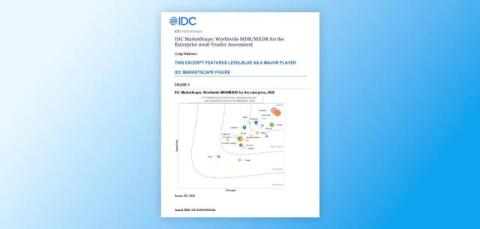
LevelBlue Named a Major Player in the 2026 IDC MarketScape MDR/MXDR for Enterprise

Security leaders are rethinking what they expect from Managed Detection and Response (MDR) providers, prompting the market to enter a new phase of maturity. Organizations are looking beyond containment metrics and response times, evaluating providers based on their ability to deliver continuous risk reduction, operational accountability, and cyber resilience.

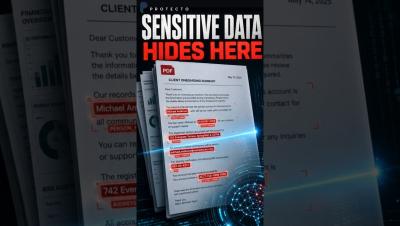
How NER Finds Sensitive Data Hidden in Documents #shorts

Sensitive data detection was much easier when information lived inside structured databases. Tables, columns, field names, and predictable data types gave security teams a clear map of where sensitive information lived. But when sensitive data moved into documents and PDFs, that map disappeared. Names, addresses, phone numbers, credit card numbers, and other sensitive information could be buried inside natural language.

CISO Risk Intel Brief: Material Exposures, Control Gaps, and Program Response

This executive intelligence briefing covers two distinct horizons: the past week (12–19 August 2026) and the past month (approximately 20 July–19 August 2026). It prioritizes AppSec, software supply chain, state-actor activity, cloud/IaC, identity, ransomware resilience, and regulatory developments with board-level implications. Analysis focuses on residual risk, control effectiveness, and business enablement rather than volume metrics alone.

"Endpoints running slow?" Agentic Performance Analysis in Tanium Atlas: Tanium Tech Talks #168

Performance issues can seem like a maze to navigate when you're manually correlating data. And identifying driver issues? Well, no one wants to go there without a performance SME. But what happens when you introduce agentic analysis? Jason Stough shows how Tanium Atlas gets you from fleet-wide analysis to investigating a single endpoint to a confirmed root cause, fast.

We Had 13 Engineers Spend Three Months Finding Vulnerabilities with LLMs

Blame for all flaws belongs to the flawed human author. Historically, the bottleneck for finding security bugs in software was human bandwidth. As pointed out in this great post by Tom Ptacek, it appears that large language models are exceptionally good at finding them with simple prompting. This adds substantial bandwidth to the effort of finding bugs.