As AI makes credential attacks more sophisticated, Keeper Security protects you with one master password that unlocks your encrypted vault, while also generating strong, unique passwords that are difficult to crack.
In this week's SecurityScorecard Weekly Brief: Threat Intelligence Edition, Richard Hummel explains why third-party risk has become one of the biggest challenges facing security teams, and why humans alone can no longer keep pace. Attackers are moving faster than ever, exploiting vulnerabilities across complex vendor ecosystems long before traditional assessment cycles can react. As Richard notes, the question is no longer, "Am I secure?" It's "Are all of my vendors secure?".
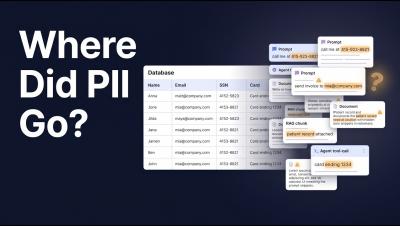
Sensitive data used to live in predictable places database columns, known field names, structured rows. That changed when data moved into documents. And it changed again when AI workflows arrived. In this video, we walk through why detecting sensitive data in AI pipelines is fundamentally different from traditional data discovery, and why the old approaches break. We cover the four failure modes that make detection hard in AI workflows.
Firewalls are the single most common source of misconfiguration-related breaches, yet they get changed a hundred times a week and audited once a quarter. This is the network security gap AI attackers exploit first. Endpoint gets the budget. Identity gets the roadmap. The firewall gets changed constantly and reviewed rarely. It is also the control most tied to breaches: 42% of security teams pinned a firewall misconfiguration to a breach or near miss last year, ahead of EDR at 40% and identity at 39%.
What would your IT team do with 150 extra hours in just one month? That’s exactly what Jamf achieved - the equivalent of nearly one additional full-time employee - while dramatically accelerating workflow delivery and reducing manual operational overhead. In this session, hear directly from the Jamf team on how they replaced manual, ticket-based IT work with intelligent workflows - from responsive phishing reporting and employee alert notifications to on-demand FileVault key recovery.
TITAN Assess reads vendor security policies and pre-fills assessment responses automatically so your team reviews findings instead of copying answers from PDFs. In this installment of SecurityScorecard's TITAN AI demo series, see AI pre-fill from vendor policies in action and find out how much faster your team moves through assessments when the manual work disappears.
Organizations are fully onboarded in multi-cloud environments (AWS, Azure, GCP), but transitioning from traditional on-prem security to the cloud poses a significant challenge. Cloud security teams now need to collaborate with traditional network engineering teams, each with different objectives, to bridge the gap.
How Network Security Policy Managers (NSPM) track dynamic IP objects for accurate traffic simulation. Understanding definitions for real-time access control.