Security | Threat Detection | Cyberattacks | DevSecOps | Compliance

Is a Private Jet Membership Worth It? Comparing Costs, Benefits, and Real Experiences

Private jet membership reshapes travel by turning every flight into a predictable and refined experience. A private jet membership secures access to aircraft at fixed hourly rates and provides a level of consistency that ad hoc charter rarely matches. Many travelers choose this route because they value time efficiency and want reliable service without navigating fluctuating prices.
Featured Post

Why SASE Success Starts with a Specialist Partner

Secure Access Service Edge (SASE) is quickly becoming a top priority for business leaders, particularly those with remote teams, cloud-focused plans, and growing security challenges, as they recognize the benefits of bringing networking and security into a single, flexible, cloud-based solution. In fact, the global SASE market is projected to reach $10.89 billion in 2026, up from $9.27 billion in 2025.

The Best SOC Tools in 2026: Legacy vs Modern Automation

See how Torq harnesses AI in your SOC to detect, prioritize, and respond to threats faster. Request a Demo Security Operations Centers (SOCs) are evolving faster than ever. As cybersecurity threats grow more sophisticated and digital infrastructure expands across cloud, hybrid, and on-prem environments, legacy SOC tools like SOAR are falling behind. Static dashboards, siloed point solutions, and human-dependent processes simply can’t keep up.

Remediation Coordination Breaks Down When Assets Have No Owner

Remediation coordination often fails because security teams are dealing with unowned assets and resources. In this hands-on demo, Seemplicity Exposure Management Strategist Rob Babb shows how ownership gaps create blind spots, stall remediation, and slow exposure reduction across teams. The walkthrough highlights how remediation orchestration establishes accountability, improves visibility, and enables automation for exposure remediation across cloud, application, and infrastructure environments.

API Security Trends 2026: Strategies, Risks & Solutions

In 2026, API security trends reveal a humbling reality. 99% of organizations have experienced at least one API security incident in the past year, with API-related breaches accounting for over 90% of all web-based attacks. Unlike yesterday’s perimeter-based threats, today’s API security challenges are fundamentally different. For every human identity, there exists ~ 82 machine identities, with >40% of those holding privilege/sensitive access within organisations.

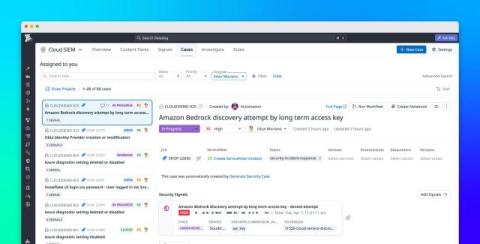
SIEM Requirements for MSPs: What You Need to Get Right

SIEM is a streamlined tool used by managed service providers (MSPs) to monitor activity across their clients’ systems in real time. The tool brings security data into one place. This makes it easier to spot suspicious activity early and respond quickly if something goes wrong. SIEM provides MSPs with a single, clear view of their environment to improve day-to-day monitoring. It also takes less time to investigate security incidents.

The Best Ticketing Tool(s): The Complete Guide for MSPs and IT Service Providers

Nowadays, businesses of all sizes rely on MSPs and IT service providers for key functions such as cybersecurity, cloud management, and digital transformation, because it is often more cost-effective and efficient than handling these tasks in-house. However, that places enormous pressure on those providers because they are expected to solve a wide range of problems around the clock.

Ensuring API Testing Meets Compliance: Policies, Performance, and Proof

APIs sit at the center of modern applications. They move data between systems, power mobile apps, and enable integrations at scale. Naturally, they are also a focal point for regulators, auditors, and attackers. Most organizations today do test their APIs. Yet many still struggle during audits. Not because testing didn’t happen, but because it wasn’t consistent, governed, or provable. Compliance frameworks don’t ask whether you ran an API scan.

New Configuration Change History in Forward Enterprise

Modern networks change constantly as teams modify interfaces, adjust routing, enable features, or deploy security controls. Over time, these individual updates create a complex configuration history that is rarely documented comprehensively. Without access to historical configuration data, engineers face significant challenges determining when changes occurred, whether they align with approved change windows, or how they influenced network behavior.

Vibe check your vibe code: Adding human judgment to AI-driven development

Remember when open meant visible? When a bug in open-source code left breadcrumbs you could audit? When you could trace commits, contributors, timestamps, even heated 2:13 a.m. debates on tabs versus spaces? That kind of openness created confidence in the code and made it possible to hold contributors accountable when issues arose. Today, as AI changes how code is created and shared, those familiar markers of trust and transparency are becoming harder to find.