Security | Threat Detection | Cyberattacks | DevSecOps | Compliance

Three AI Blind Spots Your Security Team Can't Afford to Miss

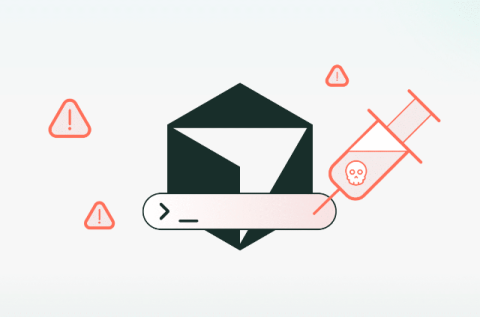
AI governance is not a policy problem. It’s a visibility problem. Most enterprises are approaching it from the outside in: writing acceptable use policies, issuing guidelines, and hoping employees comply. That approach fails because it operates on assumption rather than evidence. You cannot enforce what you cannot see and most organizations have no reliable way to see what AI tools are actually running inside their environment.

8 in 10 companies are betting on AI agents-but fewer than half have a policy to govern them

Accelerating security solutions for small businesses‍ Tagore offers strategic services to small businesses. A partnership that can scale‍ Tagore prioritized finding a managed compliance partner with an established product, dedicated support team, and rapid release rate. Standing out from competitors‍ Tagore's partnership with Vanta enhances its strategic focus and deepens client value, creating differentiation in a competitive market.

Vanta Third Party Risk Management Demo Part 2: Agentic Assessment

Vanta TPRM transforms vendor assessments into an automated, intelligent workflow, helping your team move faster without sacrificing depth. In this demo, see how Vanta's AI-powered assessment gathers evidence, answers questions, and surfaces key findings—so you can evaluate vendor risk with greater speed, consistency, and confidence.

Is Anthropic's Mythos AI a Real Cyber Threat? What You Need to Know

In the session at CII CIO Awards & Conclave, our Founder & CEO Mr. Anirban Mukherji discussed the evolving cybersecurity landscape shaped by AI and Large Language Models (LLMs) like Anthropic's Mythos. With 28 years of experience in Cybersecurity, he outlined practical defenses including SBOM management, dynamic testing, source code analysis, patch management, AI guardrails, and a "Nation First" approach for sovereignty. Explore trends like on-premises migration, shadow AI risks, and why Mythos enhances bug detection without current threats.

What Physical AI and the digitalization of critical infrastructure mean for OT security

AI-enabled systems are becoming more common in operational technology (OT) environments. What many industry analysts call “Physical AI” refers to AI systems embedded in physical environments — such as industrial cameras, robots and edge systems — that can perceive, interpret and act on real-world conditions. In industrial settings, this includes machine vision systems, predictive maintenance models, robotics optimization and edge analytics operating close to production assets.

The Mythos moment: Why agentic AI changes cybersecurity, but not in the way many think

Anthropic’s announcement of Claude Mythos Preview may end up being remembered as the moment the cybersecurity industry had to stop talking about agentic AI as a future concept and start treating it as a present security variable. The reported results are serious. Anthropic says Mythos Preview identified and exploited zero-day vulnerabilities across major operating systems and browsers during testing.

The Evolution of AI in Financial Services

Opera and artificial intelligence may not seem like natural companions, but they share one important truth: The best performances are revealed over time. Early scenes set the stage, introduce the themes, and create a sense of anticipation. The audience leans in, waiting for the big moments still to come. AI in financial services has followed the same structure.

7 Best Predictive Maintenance Software for 2026

Here's a number that should stop you cold: unplanned equipment failures cost organizations billions every year, and most teams don't catch the bleeding until it's already serious. I've seen facilities limp through reactive maintenance cycles for years, convinced it was "just how things work." It isn't. Predictive maintenance software has become the clearest answer to that problem, and in 2026, the platforms doing it best are genuinely transforming how asset-heavy operations run.

How to Bridge the Gap Between Your Applicant Tracking and Modern AI Capabilities

Most hiring teams are currently working with software that was built for a different era of technology. These legacy systems are reliable for storing data but they often lack the smart features that modern recruiters need to stay competitive in a fast market. It is a common struggle that leads to frustration.