Engineers worldwide have a tradition to look forward to every holiday season. You are taking in a sporting event on Thanksgiving Day when your uncle asks you why he keeps getting a message to update his iPhone; it’s only two years old. Or your grandma needs help with her hacked Facebook account.
Google Workspace (formerly G Suite) is a collection of cloud-based productivity and collaboration tools developed by Google. Today, millions of teams use Google Workspace (e.g., Gmail, Drive, Hangouts) to streamline their workflows. Monitoring Google Workspace activity is an essential part of security monitoring and audits, especially if these applications have become tightly integrated with your organization’s data.
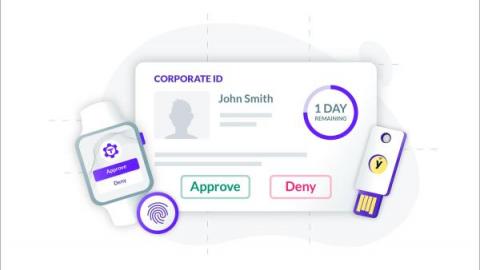
Passwords are everywhere. Sometimes they are obvious — hardcoded in the code or laying flat in the file. Other times, they take the form of API keys, tokens, cookies or even second factors. Devs pass them in environment variables, vaults mount them on disk, teams share them over links, copy to CI/CD systems and code linters. Eventually someone leaks, intercepts or steals them. Because they pose a security risk, there is no other way to say it: passwords in our infrastructure have to go.
Several malware families are distributed via Microsoft Office documents infected with malicious VBA code, such as Emotet, IceID, Dridex, and BazarLoader. We have also seen many techniques employed by attackers when it comes to infected documents, such as the usage of PowerShell and WMI to evade signature-based threat detection. In this blog post, we will show three additional techniques attackers use to craft malicious Office documents.
The abuse of Google Drive to deliver malicious content continues, and two recent examples remind us how the flexibility of this cloud storage tool can be easily weaponized by malicious actors. And the spectrum of content that can be distributed, and victims that can be targeted is surprising.
With the new year just around the corner, the world of business is set to see great change. From 5G and the Internet of Things to the blockchain, new technology trends are creating a digital transformation for companies on a global level. In this article, we’ll take a look at the latest trends in technology to keep an eye out for in 2022 and beyond.