Security | Threat Detection | Cyberattacks | DevSecOps | Compliance

Prompt Injection as the Defense Against Autonomous Cyberattacks?

I’ve watched AI-powered cyberattacks inch closer to autonomy throughout 2026, and I can point to dozens of real-world incidents as proof. AI-enabled cyberattacks surged by 56% over the last year, meaning 1 in 4 (25%) malicious breaches now involve artificial intelligence. The important one: on May 10, 2026, researchers documented the first fully autonomous LLM-driven post-exploitation attack in the wild.
Emerging Threat: (CVE-2026-89110) SAP NetWeaver Visual Composer Broken Access Control

CVE-2026-89110 is a broken access control vulnerability in SAP NetWeaver Visual Composer, classified as CWE-749, Exposed Dangerous Method or Function. Certain portal functionality does not perform sufficient authorization checks, and a low-privileged attacker can use it to invoke internal operations on a preconfigured remote system. The vulnerability carries a CVSS v3.1 base score of 9.9 (Critical), with the vector AV:N/AC:L/PR:L/UI:N/S:C/C:H/I:H/A:H.

The Cloud Is Still Physical: Why Cloud Security Makes Sense in the Data Center

We talk about the cloud as though data somehow disappears into an abstract environment, but the cloud is still physical. Somewhere there is a building filled with power systems, cooling, fiber, servers, cameras, access control and people. As data center operators expand across multiple locations, cloud-managed physical security gives them a way to manage access, video and identity consistently across the enterprise while still maintaining local resilience.

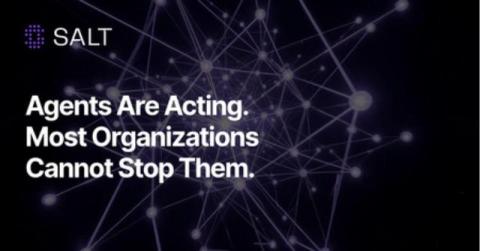
Agents Are Acting. Most Organizations Cannot Stop Them.

Nearly half of the organizations we surveyed — 49.8% — confirmed or suspected that an AI agent in their environment took an action in the past year that nobody intended, expected, or authorized. That is not a prediction. It is what security and technology professionals told us when we asked them directly, across a survey of over 380 organizations, about their experience over the last 12 months. Agentic AI has moved fast. The data shows it has moved faster than most organizations can govern.

Open Banking, Open Doors? API Abuse Through a Threat Intelligence Lens

Open banking drives financial innovation but introduces new cybersecurity risks through APIs, exposed credentials and third-party integrations. Discover how cyber threat intelligence helps financial institutions identify emerging threats, improve visibility and strengthen security.

How to Monitor AI Interactions on Employee Devices

Monitoring has to happen on the device, because three categories of AI use never reach the network in a form anything can inspect. Local models run without leaving the machine. Desktop applications that pin their certificates sit on an inspection bypass list by design. A laptop on a home connection routes through nothing the organization operates at all. ‍ The uncomfortable part is that the first two are deliberate. Somebody approved the bypass, and the approval was correct on its own terms. ‍

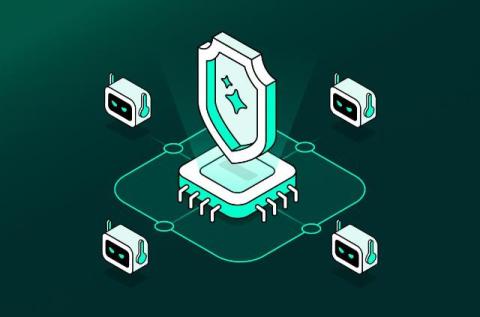
MCP Gateway Security Controls for AI Agents

The Model Context Protocol states plainly that it cannot enforce these security principles at the protocol level, and that implementors should follow best practices in their integrations. Every control an organization gets therefore comes from where it places the gateway and what it does there. ‍ The protocol publishes its own security best practices document, currently at revision 2026-07-28, naming the attacks a deployment has to handle.

Report: Ransomware Attacks Involving Data Theft Are Surging

Ransomware attacks involving data theft have surged by 275% in 2026, according to a new report from Zscaler. Attackers exfiltrated more than 896.2 terabytes of data from victim organizations, more than seven times the amount stolen during the 2023–2024 reporting period.

Why AI Red Teaming Belongs at the Core of Your AI Security Program

Enterprises are putting AI applications and agents to work on sensitive data and business workflows, while attackers look for new ways to manipulate the models and exploit the tools connected to them. Security leaders need to know whether those systems will hold up against a real attack, and AI red teaming gives them that answer by testing AI the way an attacker would.