Security | Threat Detection | Cyberattacks | DevSecOps | Compliance

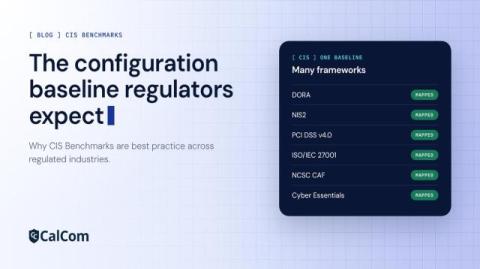
CIS Benchmarks: The Configuration Baseline Regulators Expect

Every major security regulation now asks the same question: can you prove your systems are securely configured? Few of them define what “secure” means. CIS Benchmarks fill that gap. Misconfiguration remains one of the easiest ways into an organisation. Default accounts, legacy protocols and inconsistent settings across thousands of servers hand attackers a foothold. Regulators have noticed.
CloudCasa and Dell Technologies: Disaster Recovery for Kubernetes, Built on PowerStore

Together, CloudCasa by Catalogic and Dell PowerStore provide a complete disaster recovery solution for Kubernetes environments — combining PowerStore’s native array-to-array replication with CloudCasa’s Kubernetes-aware orchestration. PowerStore handles the data path, synchronously or asynchronously, while CloudCasa discovers workloads, validates the DR plan, and rebuilds Deployments, StatefulSets, and KubeVirt VMs on the target cluster, reconnecting them to the recovered volumes.

PCI DSS SAQ A: What You Still Need to Verify About Script Attacks

Before you buy another security tool or remove an existing control, answer one question: how does your website actually present the payment form? For e-commerce merchants completing PCI DSS Self-Assessment Questionnaire A (SAQ A), that architectural detail matters. An embedded payment form, a redirect, and a fully outsourced payment process are different arrangements, with different implications for how the SAQ A script-attack eligibility criterion applies.

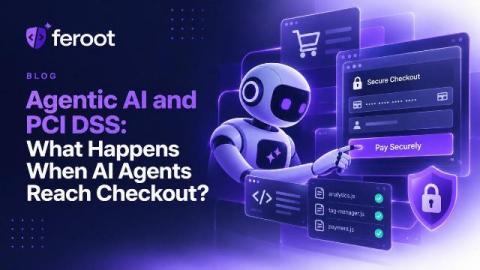
Agentic AI and PCI DSS: What Happens When AI Agents Reach Checkout?

An AI shopping assistant can recommend a product without being allowed to buy it. An agentic AI system may go further: access an account, select a payment method, interact with a checkout, and initiate a transaction. Each added permission changes the payment-security questions you need to answer. Before adding an agent to a payment journey, draw its boundary. What can it read? What can it change? What can it authorize? What happens when it encounters content controlled by someone else?

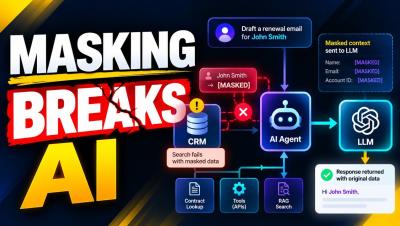
Why Data Masking Breaks AI Workflows (And What Works Instead)

What if masking sensitive data actually broke your AI application? Most AI security strategies start with a simple rule: mask sensitive information before it reaches the LLM. But real AI workflows are more complex. An AI agent might need to search a CRM, retrieve a contract, check account details, call external tools, and generate a response. Each step may require a different level of access to sensitive data.

The Quiet Takeover: How Your Forgotten Cloud Resources End Up Selling Slot Machines

Picture a global telecom company. Three years ago, a marketing team launched a campaign microsite on a cloud platform and pointed a company hostname at it. The campaign ended and the team deleted the app. Nobody deleted the DNS record. A few years ago, that mistake could sit there for a decade. No one was looking. Today, attackers run automated sweeps across millions of domains, resolving every DNS record and checking whether the resource behind it still exists.

AI governance needs more than a policy document

AI tools have made it remarkably easy for a company to expose its own data: None of these actions seem malicious, but each one moves sensitive information somewhere the security team cannot see. This new era of "move fast and break things”, a phrase famously coined by Mark Zuckerberg in the early Facebook days, benefits attackers. Company data now flows through more places, more third parties, and more delegated credentials.

Sophos AI Defense is now generally available

Bring AI out of the shadows with visibility and control that help your organization adopt AI securely. When we introduced Sophos AI Defense in July, we focused on a challenge facing organizations everywhere: AI adoption is accelerating, often faster than security and IT teams can see or control it. New AI tools, embedded capabilities, and shadow AI are creating blind spots around where AI is being used and what information it can access.

Stopping attackers who want your endpoint protection to go dark

EDR Killers let attackers blind endpoint protection before the real attack begins, and Sophos Endpoint stops them with several layers that are on by default. Most people picture a cyberattack as something loud: files encrypting, screens locking, a ransom note. But the attacks that do real damage usually start quietly. Before an attacker steals data or deploys ransomware, they try to make sure nobody is watching. That means dealing with the endpoint protection on the device first.

Building intent-based access control without reading minds

This article was first published on LinkedIn. In Minority Report, the Department of Precrime promised certainty. Three precognitives saw the future, the system picked the consensus, and police arrested people for murders they hadn't yet committed. The whole machine depended on one buried secret: sometimes the precogs disagreed, and the dissenting vision, the minority report, was quietly deleted. The system held together as long as the precogs agreed, but broke when it removed its own doubt.