Security | Threat Detection | Cyberattacks | DevSecOps | Compliance

Continuous Attacker Emulation: Testing Controls Between Annual Assessments

Security controls are built to stop attackers, but most organizations only find out whether those controls actually work once a year, during a scheduled assessment. In the months between those engagements, configurations change, new tools get deployed, and remediation work from the last test either holds up or quietly fails without anyone noticing. Continuous attacker emulation exists to close that gap, giving security teams an ongoing read on their actual exposure rather than a single snapshot frozen in time.

Top 5 Antidetect Browsers for Web Scraping, Research, and Data Collection at Scale

Modern web setup needs strong anti-bot tools. These tools look at what comes in from the web, the browser settings, and what the canvas shows to find bots. People who work in company growth, data, and research often need to pull data from the web. For them, normal headless browsers like Puppeteer or Selenium are easy to spot. To get data many times, you will need tools that can hide your system details in several sessions at once.

5 Best Direct Mail APIs for Automated, Multi-Touch Campaigns

Email has triggers, sequences, and dashboards. For years, direct mail had a spreadsheet and a print deadline. A good direct mail API closes that gap: your software decides who gets a mailpiece and when, and the provider prints, mails, and tracks it. The catch is that "best" depends on the job. A product team embedding transactional notices needs something very different from a marketing team running three-touch campaigns across dozens of clients. I compared Postalytics, Lob, PostGrid, PCM Integrations, and Click2Mail on the factors that actually separate them.

The cybersecurity problem hiding in your later list

Let's be honest: Every IT team has that one thing. That ancient server that nobody wants to touch somehow still runs. That vulnerability that has been sitting in the remediation queue because there were more critical issues to handle, and then there's the active service account that was created for a temporary project three years ago. Or perhaps there's a security exception that was only supposed to last for 30 days and quietly became permanent. Nothing has exploded yet, so it is easy to leave it alone.

Keeper Security Surpasses 100,000 Enterprise Customers as Organizations Consolidate Identity Security Solutions in the Agentic Era

Keeper Security, the leading zero-trust and zero-knowledge identity security platform, today announces it now protects more than 100,000 organizations globally. Keeper’s customer growth builds on consistent company milestones including surpassing $240 million in Annual Recurring Revenue (ARR) and also earning recognition from Gartner as the second fastest-growing competitor in the worldwide security software market in 2025.

Zero Trust for AI Agents: Enforcing Anthropic's Framework

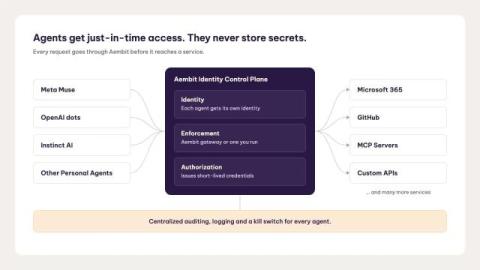
AI has changed how work gets done. Agents can plan tasks, query enterprise repositories, invoke tools, write code, call application programming interfaces (APIs), and take actions across connected systems. As they work, they create, copy, fragment, transform, and share data across workflows. A perimeter and a one-time authorization decision do not provide enough control for this operating model. An agent can chain permissions, tools, integrations, and data sources while completing a task.