Security | Threat Detection | Cyberattacks | DevSecOps | Compliance

Keep Cyber Threats Out of Play: Five Cybersecurity Tips for Golf Facilities

Originally published by the PGA of America. Operating a golf facility means keeping track of a lot more than what’s happening on the course. Tee times, lesson schedules, payroll and vendor payments all depend on technology working as it should. Keeping those systems secure is easy to put off when everything is running smoothly, but it’s worth making time before a problem interrupts the day.
Allow, Mask, Anonymize, Rewrite: Control AI Data, Don't Remove It #ai #shorts

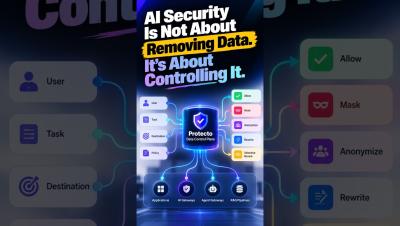
The goal of AI data security isn't to remove data. It's to control it. For every request, Protecto decides in real time whether data is allowed, masked, anonymized, rewritten, or selectively revealed. Those decisions change with the user, the task, the destination, and the policy.

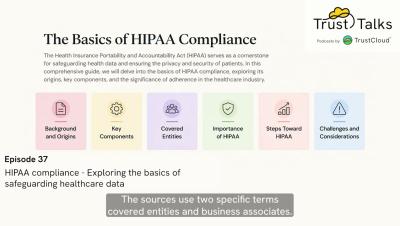
HIPAA compliance Exploring the basics of safeguarding healthcare data | TrustTalks - Ep 37

With digital health records and telemedicine becoming the norm, safeguarding patient information is more critical than ever. The Health Insurance Portability and Accountability Act (HIPAA), enacted in 1996, serves as the cornerstone of healthcare data protection in the United States. Designed to ensure the confidentiality, integrity, and availability of Protected Health Information (PHI), HIPAA sets national standards for healthcare providers, insurers, and their partners. Compliance with HIPAA not only mitigates legal and financial risks but also fosters trust between healthcare organizations and patients.

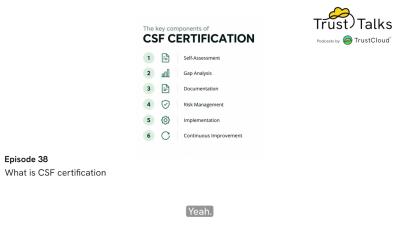
What is CSF certification | TrustTalks - Ep 38

Organizations across industries are constantly challenged to protect their sensitive information and manage potential risks effectively. CSF certification, short for Cybersecurity Framework certification, has emerged as a significant marker of an organization’s readiness to face cybersecurity challenges while ensuring compliance with industry standards. In this podcast, we explain what CSF certification is, examine its origins and benefits, and offer insights into how organizations can achieve and maintain this critical certification.

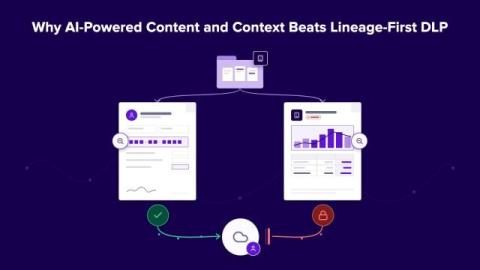
Why AI-Powered Content and Context Beats Lineage-First DLP

The Journey to Autonomous DLP · Context Intelligence Understand the content and the boundary first. History is a secondary factor. Our vision for Autonomous DLP starts with understanding data well enough to make the right decision in real time. What does the document contain? Does it hold the user’s own information, someone else’s records, or confidential company material?

What the SBI Data Exposure Tells Indian Banks About DPDP Readiness

India’s largest bank confirmed a data loss incident in a 21 October 2026 filing with the BSE and NSE. The alert came five days earlier, on 16 October, through SBI’s threat intelligence channels, which its filing names alongside the Defence Cyber Agency, and from CERT-In. Both flagged suspected customer data on the dark web.

Node2Shell (CVE-2026-111497): Why Server-Side Vulnerabilities Create Browser-Side Risks

Just days after the disclosure of two critical PHP vulnerabilities, another serious security flaw has emerged, this time affecting Node.js and the widely used Brotli compression library. Known as Node2Shell (CVE-2026-111497), the vulnerability can allow attackers to corrupt application memory by supplying specially crafted compressed data. Successful exploitation could result in application crashes, information disclosure, or remote code execution (RCE).

SANS 2026 Exposure Management Survey

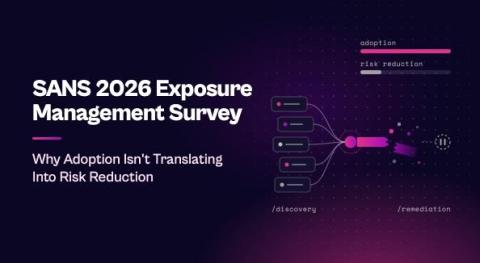
The SANS 2026 Exposure Management Survey reveals a significant gap between adoption and effectiveness. While 91% of organizations have implemented exposure management, only 7% operate continuously, and just 15% report significant risk reduction. The biggest challenges aren’t a lack of security tools, but fragmented exposure data, incomplete asset visibility, unclear remediation ownership, and manual workflows.

PHP2Shell Vulnerabilities: What Happened, Who Is Affected and How to Respond

On 21 October 2026, two critical vulnerabilities in PHP, known collectively as PHP2Shell, prompted urgent security warnings from the UK’s National Cyber Security Centre (NCSC) and other cybersecurity authorities. Tracked as CVE-2026-109168 and CVE-2026-109619, both vulnerabilities carry a CVSS v4.0 score of 9.2 and could allow unauthenticated attackers to execute malicious code remotely on vulnerable PHP servers.