Security | Threat Detection | Cyberattacks | DevSecOps | Compliance

Unpacking the CrowdStrike 2026 Threat Hunting Report with CrowdStrike's Katie Blankenship

The CrowdStrike 2026 Threat Hunting Report is now live! The report sheds light on how our threat hunters and analysts hunt and defend against the world’s most sophisticated adversaries. It’s packed with stories from the front lines and trends that define the modern threat landscape.

7 Ways to Improve Microsoft Sentinel Detection Outcomes

See how Securonix Threat Analytics helps security teams improve detection coverage, reduce SOC engineering work, and maximize Microsoft Sentinel ROI. Microsoft Sentinel provides a strong foundation for security operations. As environments grow more complex, detecting sophisticated attacks often requires extensive engineering, custom KQL development, and ongoing content maintenance.

CrowdStrike 2026 Threat Hunting Report: Exploitation Window Closes as AI Use Accelerates

The CrowdStrike 2026 Threat Hunting Report illustrates the next evolution in trust abuse. Adversaries are targeting trusted users and tools across identity systems, cloud environments, SaaS applications, AI services, software supply chains, and developer workflows to blend into legitimate business activity and reach critical assets before defenders can detect them. Our frontline intelligence in this year’s report underscores this shift.

Best Practices for Managing the Identity Lifecycle

Every employee, contractor, and partner who touches your systems creates a paper trail of accounts, permissions, and access rights that has to be managed from the day they join to long after they leave. Identity lifecycle management is the process of creating, updating, and retiring a user's digital identity and access rights across that entire span — from onboarding through role changes to offboarding.

Next Gen SIEM: Modern Security Ops Guide

Monday starts the same way in too many SOCs. The queue is already full, the overnight team has left behind a stack of alerts nobody had time to finish, and the first hour goes to deciding which notifications are real and which ones are just noise. That's the point where next gen SIEM stops being a product category and becomes an operational decision, because the wrong platform turns your analysts into log clerks while the right one helps them work threats in real time.

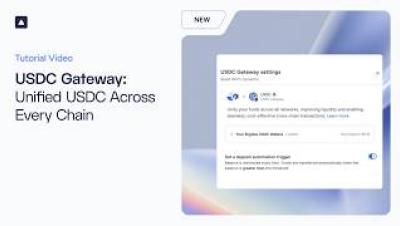
How to Use USDC Gateway with Fireblocks (API + UI)

Learn how to use USDC Gateway in Fireblocks to hold one unified USDC balance across chains and move it without managing per-chain inventory yourself. In this walkthrough, Matt from Fireblocks activates a Gateway wallet, makes a deposit, sets up recurring deposit automation, and withdraws to another chain, showing each step in both the API (Postman) and the Console UI. You'll also see how withdrawals pull gas from your USDC balance, so you don't need to hold native gas on the destination chain.

HuggingFace's List of Demands - The 443 Podcast - Episode 381

This week on the podcast, we review HuggingFace's technical write up of their recent run in with a rogue OpenAI model, as well as their CEO's demands from OpenAI in response. We then cover an interesting research whitepaper that describes a side channel attack that could let AI transcribe typed text by an audio recording alone. We end with a threat intelligence report about DNS Poisoning attacks against hotel Wi-Fi systems.

Why Traditional SAST Fails on AI-Generated Code

AI didn't just speed up software development, it changed what application security programs must defend. As AI coding assistants generate code at machine speed and developers integrate AI agents, models, and RAG pipelines into production, traditional scanners generate endless backlogs of unprioritized alerts.