Security | Threat Detection | Cyberattacks | DevSecOps | Compliance

Cyberhaven Brings Data Visibility and Lineage to Claude Enterprise

There is a difference between watching data go into an AI tool and knowing what is inside it. Most security tools do the first. Few do the second. Employees now keep contracts, source code, and customer records inside their AI workspaces, in chats and projects that build up for months. Cyberhaven's integration with Claude's Compliance API brings that content into view for Claude Enterprise, and ties it back to where it came from.
Enterprise AI Security vs. Legacy DLP: Key Differences

Teams evaluating whether to replace or extend an existing DLP stack often run into the same question: Is this actually a different category of tool, or just DLP with an AI feature bolted on? The two security categories overlap enough to cause real confusion in a buying cycle, and many may think that once will, by extension cover the other.

DPDP Readiness for Indian Businesses From Compliance Requirements to Data Protection

India’s Digital Personal Data Protection (DPDP) framework is changing how businesses need to manage and protect personal data. In this video we explore what DPDP readiness means in practice and how organizations can strengthen their approach to protecting personal data throughout its lifecycle. The session covers: The webinar also discusses how backup and recovery capabilities can support a broader data-protection and compliance strategy, including encryption, access control, immutable storage, policy-based retention, centralized management, and recovery.

Modern Data Security Should Be Anchored To Your Data's Lineage

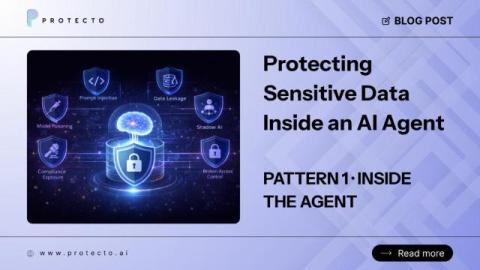
New AI tools appear every day. The novelty and utility they bring, along with the constant pressure to be more productive, pull employees toward them to get work done faster. The intent is good but the effect can range from problematic to damaging, because while there are rules in place for sanctioned tools, there are none for the ones that quietly show up in between.

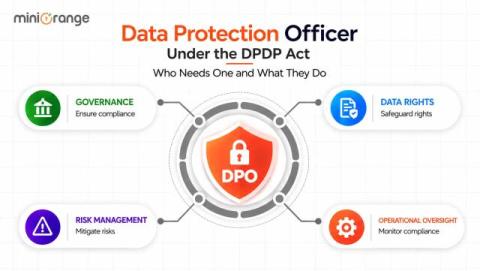
Data Protection Officer Under the DPDP Act: Who Needs One and What They Do

Not every organization that processes personal data has to appoint a Data Protection Officer. Under India's Digital Personal Data Protection Act, 2023, this duty applies only to Significant Data Fiduciaries (SDFs), a category the government assigns based on the scale and sensitivity of the data an entity handles. So before you assume your business needs a data protection officer, it helps to know exactly where this obligation begins and ends.

Stopping Data Exfiltration From Departing Employees

Departing employees still email files to personal accounts and copy them to USB drives. Now they also paste sensitive content into ChatGPT, Claude, or Gemini to summarize a codebase, draft a portfolio piece, or package a project before their last day. Neither channel has replaced the other. The attack surface has simply gotten wider, and most security teams are still staffed and tooled for the channels they already know how to watch.

The Fragment Is the New Attack Surface

Most security tools evaluate risk by looking at the file, but risk is no longer confined to files. A clause pasted into an AI prompt carries no filename. A table summarized into Slack carries no label. A screenshot dropped into a deck carries no metadata, yet none of these trip an alert, because legacy data loss prevention (DLP) was built for a world where the sensitive unit is a discrete object with a name, a location, and a policy attached to it. That world is gone.

How to Audit Data Access for HIPAA, PCI, and GDPR

When an auditor asks who can access protected health information, cardholder data, or EU personal data, and why, most security teams cannot answer with confidence right away. Access sprawls across cloud storage, SaaS applications, shared drives, and generative AI tools faster than manual reviews can track it. Permissions get granted for a single project and never revoked. A spreadsheet gets shared broadly and forgotten.

8 Key DLP Use Cases Every Enterprise Should Know

Most enterprise data loss prevention (DLP) programs get judged on a single metric: how many exfiltration attempts did it block last quarter. That framing undersells what a modern DLP program needs to do. Sensitive data now leaves through AI prompts, personal cloud accounts, and agent-initiated file transfers that a legacy blocking rule alone was never built to catch, while auditors and boards expect evidence that the program is working, not just alerts confirming it.