Security | Threat Detection | Cyberattacks | DevSecOps | Compliance

Introducing Astra's API Security Platform: See Every API, Secure Every Endpoint, Stop Breaches Before They Begin

APIs have quietly become the new first point of failure. They run the workflows your customers see, as well as the ones they never do. Every transaction, every authentication, every AI-driven feature is stitched together through APIs. That same interconnection has made them one of the most consistently underprotected parts of modern infrastructure. The numbers show the shift.

August Release Rollup: AI-Powered Agents, Egnyte to Egnyte Connector 2-Way Sync, and More

We’re excited to share new updates and enhancements for August, including: For more information on these updates and others, please read the complete list below and follow the links for more detailed articles.

Automating threat analysis and response with Cloudy

Security professionals everywhere face a paradox: while more data provides the visibility needed to catch threats, it also makes it harder for humans to process it all and find what's important. When there’s a sudden spike in suspicious traffic, every second counts. But for many security teams — especially lean ones — it’s hard to quickly figure out what’s going on. Finding a root cause means diving into dashboards, filtering logs, and cross-referencing threat feeds.

Cloudy Summarizations of Email Detections: Beta Announcement

Organizations face continuous threats from phishing, business email compromise (BEC), and other advanced email attacks. Attackers adapt their tactics daily, forcing defenders to move just as quickly to keep inboxes safe. Cloudflare’s visibility across a large portion of the Internet gives us an unparalleled view of malicious campaigns. We process billions of email threat signals every day, feeding them into multiple AI and machine learning models.

Immediate, Automated, Compliant Access Enforcement with Teleport JIT Watcher

A common request we hear at Teleport is for immediate Just-in-Time (JIT) access. Users shouldn't have standing access to resources, but they do need an audited escalation and approval process they can personally execute when access is required. This raises an important challenge: how do we ensure users only access the resources they truly need, without creating access sprawl or slowing teams down?

Securing Shadow AI: 6 Principles from Security Leaders Who've Been There

Everyone's racing to use AI right now. But securing AI adoption while maintaining productivity—getting visibility into shadow AI, educating employees without blocking innovation, and building governance that actually works—is harder than it looks. We recently hosted a discussion between Anant Mahajan, Head of Product at Nightfall, and Yunique Demann, VP of Information Security at TPx, to dig into the practical realities of AI governance.

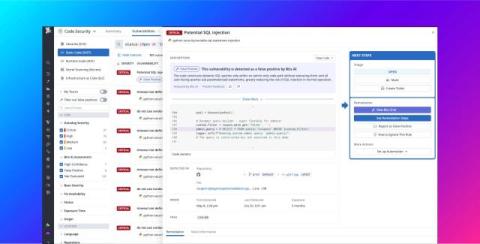
FreePBX Authentication Bypass Leading to SQL Injection and RCE (CVE-2025-57819)

A new critical vulnerability has been identified in FreePBX, the widely adopted open-source, web-based graphical user interface for managing Asterisk PBX systems. Tracked as CVE-2025-57819, this flaw affects FreePBX versions 15, 16, and 17 and enables unauthenticated attackers to bypass administrator login controls. Once inside, threat actors can perform SQL Injection attacks that lead directly to remote code execution (RCE).

Secure More with Less: Achieving Cost Avoidance in Government with Keeper's Unified Platform

Government agencies are under increasing pressure to reduce operational costs while strengthening their defenses against costly cyber threats. Legacy systems and disjointed security tools lead to growing complexity, inefficiencies and higher expenses. Keeper Security offers a unified cybersecurity platform that eliminates the need for legacy Privileged Access Management (PAM) solutions, traditional password management, endpoint privilege management, remote access tools and secrets management.

Bridging the Gap Between IT and OT Cybersecurity in the Middle East's Critical Infrastructure

As the Middle East rapidly accelerates its digital transformation across sectors like energy, oil and gas, and manufacturing, the traditional gap between IT and OT cyber security is closing. Industrial operators now rely on interconnected systems to maximize efficiency, but this increasing convergence introduces new vulnerabilities that cannot be addressed in isolation.