Security | Threat Detection | Cyberattacks | DevSecOps | Compliance

Privacy and Boundaries in Remote Work: The Webcam Conundrum

As remote work becomes the new normal, the question of privacy and boundaries has taken centre stage. Join us for an engaging discussion on the challenges of webcam surveillance in the digital age. In this video, we share intriguing anecdotes and thought-provoking scenarios that shed light on the delicate balance between oversight and respecting personal space. Discover the story of a colleague juggling work and family life, where a simple shift in perspective led to a crucial realization about safeguarding privacy. We delve into the implications of capturing personal moments on corporate servers and the potential ethical concerns that arise.

Labor Day Alert: Mobile Phishing Attacks on the Rise for Remote Employees

A recent survey by Lookout, Inc. warns for a specific attack vector as Labor Day approaches. The study shows that 85% of enterprise employees capable of remote work plan to do so on Friday, September 1, primarily using mobile devices. This creates an ideal environment for hackers to launch targeted phishing attacks. The risk is exacerbated by the fact that 80% of respondents admit to being more relaxed and distracted when working remotely on Fridays during the summer.

Sponsored Post

Automation and the value of power management

Has the pandemic come to an end? Are we back to a full-fledged, in-office work style? The answer is absolutely not. What we proposed as the "new normal" (working from home) back in 2020 is now just normal in 2023. Gartner research predicted that "almost 50% of employees will will continue to work remotely post-pandemic," which is the reality now! With this shifting trend towards a flexible work culture, it's essential for front line IT workers, aka sysadmins, to stay equipped with a supercharged remote troubleshooting toolkit to rescue endpoints in trouble.

Securing Privileged Access in a Remote Work World: Challenges and Best Practices

In today's disconnected world, the task of managing privileged access has become increasingly challenging. The surge in remote work has exposed employees to new vulnerabilities as they access sensitive systems and data from unsecured networks and personal devices, making them attractive targets for cyberattacks. To combat these risks, organizations must adopt Privileged Access Management (PAM) solutions.

Network Detection and Response Tools for Remote Working

Remote workforces need network detection and response tools (NDR), but deploying an NDR that works with remote and hybrid environments is another story. Most NDRs are designed for on-premises networks. Unfortunately, that couldn’t be further from what the typical modern environment looks like.

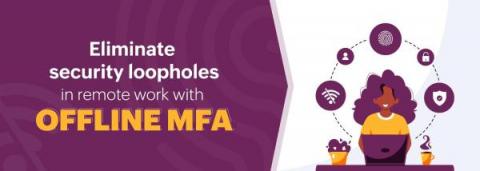
Securing your offline remote workforce with MFA

Twenty percent of IT enterprises experienced a breach due to a remote worker during the pandemic, says a report by Malwarebytes Labs. Choosing to let employees work remotely comes with pros and cons—the cons primarily being unanticipated security vulnerabilities. These vulnerabilities are more likely to occur because of employee ignorance, rather than a network or system malfunction.

Why Remote and Hybrid Teams Need NDR

If you are wondering whether your firm needs network detection and response (NDR), ask yourself this question: How often did your team come into the office in the last week? Probably more than they did last year, but almost certainly daily. This is what work now looks like for most people. And if this describes your organisation, you need an extra layer of defence inside your network perimeter. To see why, just look at what has happened to the network perimeter itself.

4 Steps to Safeguarding SD-WAN in Response to Rise of Remote Work

Ensuring employees operate securely regardless of location has grown in importance over the last several years as the number of people working remotely has exploded. These workers are most likely operating within a software-defined wide area network (SD-WAN). They use SD-WAN to work with data that is now processed more and more in many different cloud services.

Five new cybersecurity challenges posed by hybrid or remote work

Hybrid work, which involves splitting the working week between in-office and remote work time, is the new normal that many companies have been adapting to after the COVID-19 pandemic crisis forced them to work remotely to continue providing services. A recent study indicates that, in fact, 58% of companies have been encouraged to promote a hybrid return to the office. In addition, it estimates that 48% of employees will be following a hybrid or remote model in the next two years.

Understanding Evolving Insider Risks in a Hybrid World

Insider risks are threats that already have access to an organization’s sensitive information. They are people who have physical access to the organization’s buildings and credentials to sign-on to the network. But maybe more importantly, they’re familiar with the organization’s processes, they speak the company lingo, and they know where the important assets reside.