Security | Threat Detection | Cyberattacks | DevSecOps | Compliance

Emotet: New Delivery Mechanism to Bypass VBA Protection

Emotet started as a banking trojan in 2014 and later evolved to what has been considered the world’s most dangerous malware by Europol, often used throughout the world to deliver many different threats, including TrickBot. In October 2020, Netskope analyzed an Emotet campaign that was using PowerShell and WMI within malicious Office documents to deliver its payload. Later in 2021, we also spotted new delivery mechanisms being used, including squiblytwo.


Deep dive on the BLISTER loader

Yesterday, the Elastic Security Research Team released a detailed report outlining technical details regarding the BLISTER launcher, a sophisticated campaign that we uncovered in December 2021. This latest release continues on research we’ve developed while observing the campaign over the last few months — specifically pertaining to the technical details of how the group behind this payload is able to stay under the radar and evade detection for many new samples identified.

Threat Update: Cyclops Blink

The Splunk Threat Research Team continues to address ongoing threats in relation to geopolitical events in eastern Europe. The following payload named Cyclops Blink seems to target Customer Premise Equipment devices (CPE). These devices are generally prevalent in commercial and residential locations enabling internet connectivity (Cable, DSL Modems, Satellite Modems, Firewalls, etc).

Achieve Near-Zero RPO & RTO with Orchestrated Application Recovery

In the summer of 2021, Rubrik officially released its first SaaS-based automated Disaster Recovery (DR) solution, Orchestrated Application Recovery. Orchestrated Application Recovery is incredibly easy to use: no need to install new binaries, no need to integrate between different vendor’s products.

BlackCat/ALPHV Ransomware: Cybriant Responds to FBI Warning

The Federal Bureau of Investigation (FBI) recently released a Flash Report regarding BlackCat Ransomware breaches. This ransomware as a service (RaaS) has compromised at least 60 entities worldwide and is the first ransomware group to do so successfully using RUST, considered to be a more secure programming language that offers improved performance and reliable concurrent processing.

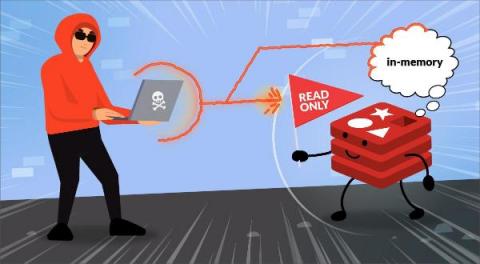
Compromising Read-Only Containers with Fileless Malware

Containers provide a number of security features that are not simply available on a normal host. One of those is the ability to make the container’s root filesystem read-only. By making the file system unable to be altered, it prevents an attacker from writing their malware executable to disk. Most attacks rely on writing files in order to work, but sophisticated cases use fileless malware as part of their malicious behavior.

Ransomware Response and Remediation With a Data Observability Engine for Data Security

Ransomware can be expensive—in 2021, the average cost of a ransomware attack was $4.62million, and that doesn’t include the ransom itself. Beyond financial costs, the cost of time, data, and brand reputation can also be astronomical. According to the IST Ransomware Task Force, the average downtime can be 21 days, with full recovery taking on average 287 days from the initial ransomware incident response. And cyber criminals are getting more sophisticated every year.

Analysis on recent wiper attacks: examples and how wiper malware works

Wiper’s main objective is to destroy data from any storage device and make the information unavailable (T1485). There are two ways of removing files, logical and physical. Logical file removal is the most common way of erasing a file, performed by users daily when a file is sent to (and emptied from) the Recycle bin, or when it is removed with the command line or terminal with the commands del/rm.

AWS Targeted by a Package Backfill Attack

On April 28 and April 30, respectively, WhiteSource Diffend identified, blocked, and reported two packages we deemed were malicious versions of original Amazon Web Services (AWS) packages. Whitesource security experts have reached out to contacts at Amazon to notify them of our findings. This discovery may point to a new takeover method that targets packages of well-known origins, in this case, AWS.

Ransomware costs show prevention is better than the cure

If your company is worried about the financial hit of paying a ransom to cybercriminals after a ransomware attack, wait until they find out the true cost of a ransomware attack. Because the total costs of recovering from the ransomware attack are likely to be much, much higher. That’s the finding of a new study by researchers at Check Point, who discovered that the average total cost of a ransomware attack is more than seven times higher than the average ransom paid.