Security | Threat Detection | Cyberattacks | DevSecOps | Compliance

CRN Recognizes WatchGuard in its Prestigious Annual Security 100 List

Once again for 2023, CRN has recognized WatchGuard as one of the top IT channel security leaders in its prestigious annual Security 100 list for 2023. CRN’s Security 100 honorees bring a combination of channel focus and trailblazing, innovative technology to solution providers.


The Triple DES Intro: Triple Data Encryption Standard

Triple Data Encryption Standard (Triple DES) is a symmetric block cipher-based cryptography standard that uses fixed length keys with three passes of the DES algorithm. As a symmetric cryptographic scheme, DES implementations rely on the same secret keys shared between the sender and the recipient. As we’ll see later, Triple DES was developed as a way to prevent man in the middle attacks. Let’s take a look at Triple DES — and we’ll start first with DES.

Introduction To Key Management

Cryptography is used to secure data at rest, stored in servers, and in motion, transmitted over the network. Cryptography involves mathematical operations that convert the original plaintext into an unintelligible ciphertext (encryption) and the reverse process, converting ciphertext to plaintext (decryption). Cryptographic algorithms apply these algorithms in combination of keys, which serve as a secret knowledge to complete the algorithmic operations correctly.

Threat Hunting vs. Threat Detecting: Two Approaches to Finding & Mitigating Threats

Threat hunting and detection are two major prevention strategies in modern cybersecurity systems. Both strategies help identify potential threats to the organizations — though they take different approaches to threat identification. This article explains the difference between threat hunting and detection, so you know what to focus on for your organization’s cybersecurity strategy.

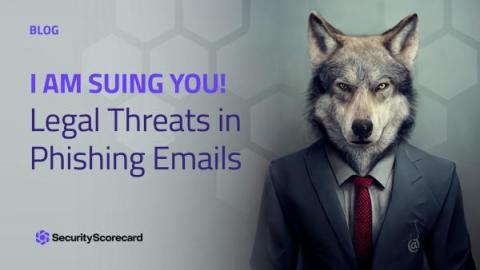
I Am Suing You! Legal Threats in Phishing Emails

Unless you’ve been avoiding your inbox like a cybercriminal avoids sunlight, you’ve probably seen something like this before: That right there is a classic example of a phishing email. Most security-aware individuals can spot a phishing email from a mile away. In the past, it used to be the misspellings, such as in this email, that gave it away. Now, misspellings and poor grammar aren’t ideal indicators of phishing attempts.

Most Common HECVAT Violations (And How to Avoid Them)

The HECVAT (Higher Education Community Vendor Assessment Toolkit) was developed by the Higher Education Information Security Council (HEISC) as an initiative to help higher education institutions better protect their data, prevent the risk of data breaches, and measure the cyber risk of third-party solution providers.

The CISO's Guide to Application Security Innovation

Threat actors operate by an ironclad rule: If it’s important to businesses, it’s important to them. And they certainly understand the crucial business role of applications. Applications are now the number one attack vector, while software supply chain attacks increased 650 percent in a year. Clearly, if you don’t already have a modern application security program, you need to build one. But how do you make sure that your program will be effective?

How should PHI be de-identified in accordance with the HIPAA Privacy Rule?

HIPAA Security Rules and Privacy Rules were established to secure the Protected Health Information (PHI) data of patients that healthcare organizations collect, process, and/or transmit. The regulation has identified 18 HIPAA Identifiers that are considered as Personally Identifiable Information (PII) which is a part of the PHI data.

6 Steps to Prepare Data Before SharePoint Migration to Microsoft 365

A Cloud data migration project can be a complicated procedure that requires much planning, coordination, and management to ensure successful outcomes. There are many risks to consider including data quality control, over-exposure, data loss and the costs involved, particularly when it comes to large volumes of specialized data. When an organization is considering a SharePoint migration to Microsoft 365 (M365), they must prepare their data to mitigate these risks to ensure a successful outcome.

The Importance of Selfie Verification API for Digital Identity Verification

Identity fraud is on the rise, and con artists are getting more skilled. 52% of businesses reported experiencing fraud in the previous 24 months, according to a PwC-commissioned poll. 10% of them even claimed that their most disruptive occurrence cost them more than $50 million in financial terms. Personal data is being sold on the dark web, accounts are being hacked, and phishing emails are being sent.