Security | Threat Detection | Cyberattacks | DevSecOps | Compliance

Routing Context: The Missing Piece In Network Incident Response

Ask anyone who has run an incident bridge during a routing event, and they will describe the same scramble. Traffic is going somewhere it should not, alerts are firing, and the team is trying to answer a deceptively simple question: is this announcement legitimate, and if not, whose is it? The tools to answer exist, but they are scattered, and the minutes spent stitching them together are minutes traffic keeps flowing the wrong way.


Best Ad Blockers in 2026: Who Survived Manifest V3

The best ad blockers in 2026 look very different from what most Chrome users had installed just two years ago. If you opened your browser one morning and saw a yellow warning banner reading "This extension may no longer be supported," you experienced Manifest V3 firsthand. For millions of people, it was the moment a tool they'd quietly depended on for years simply stopped working as advertised.

How to Build Reliable Data Integration Pipelines That Actually Support AI and ML at Scale

AI has become surprisingly good at spotting patterns, writing code, summarizing documents, and answering complex questions. Yet many AI projects still hit the same wall long before the model becomes the problem. The real challenge often lies in something far less exciting: getting the right data to the right place, in the right format, at the right time.

How Professional IT Services Help Businesses Strengthen Security and Maintain Cybersecurity Compliance

Maintaining strong Cybersecurity Complianceis no longer something organizations can treat as an occasional task. Technology supports nearly every aspect of daily operations, from communication and collaboration to customer service and data management. When systems are not properly maintained, even a small security gap can lead to disruptions, data exposure, and unexpected costs. Taking a proactive approach to technology management helps reduce risk, improve reliability, and create a stronger foundation for long-term success.

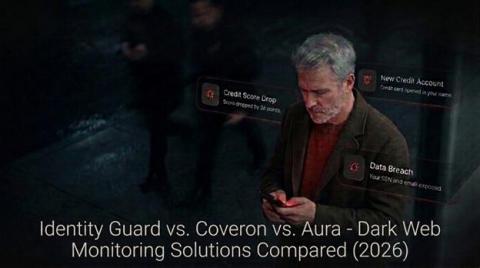
Identity Guard vs. Coveron vs. Aura - Dark Web Monitoring Solutions Compared (2026)

Dark web monitoring services differ more in what they scan and who they protect than their marketing suggests. One service leans on IBM Watson to guard against medical identity theft, another is built for personal and family protection with malware breach alerts, and a third extends its coverage to employers. Each targets a different reader, so the right pick depends on who and what you need to protect.

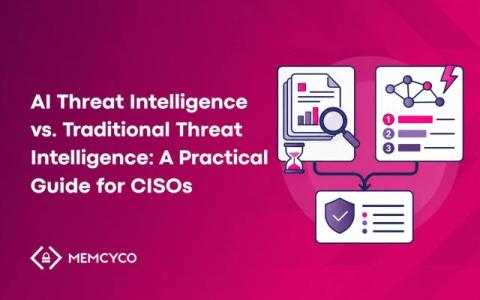
AI Threat Intelligence vs. Traditional Threat Intelligence: A Practical Guide for CISOs

Most CTI programs aren’t failing because analysts lack skill. They’re failing because signal volumes have outpaced what any manual workflow can process. Thousands of newly registered domains, phishing kit variants, and brand impersonation attempts surface daily. Human teams can’t triage all of it. Threat intelligence automation addresses the throughput problem by automating collection, enrichment and prioritization so analysts spend time on decisions, not data wrangling.

From E-Sign to RMM: DocuSign Kit Targets Windows and macOS

BlueVoyant SOC (Security Operations Center) and Threat Fusion Cell (TFC) teams are tracking a long-running phishing and remote access campaign that uses DocuSign/e-sign themed lures and a reusable web kit to drive victims into installing legitimate remote access tooling.

Best Cyber Risk Posture Management (CRPM) Platforms

The modern security landscape is an unfair fight. The perimeter is gone—replaced by a borderless terrain where a team of one to 10 is expected to defend the same footprint as a 50-person security operations center (SOC). Attack surface. Vendor ecosystem. Workforce identity. Even fully-staffed teams struggle to cover them all. For a lean team, that coverage fractures almost instantly.

Protecting Vulnerable and Poorly Configured Network Devices

On July 13, 2026, NSA, CISA, the FBI, and co-sealing partners from twelve other countries published AA26-194A, a joint Cybersecurity Advisory (CSA) warning that Center 16 of Russia's Federal Security Service (FSB) continues to exploit vulnerable and poorly configured network devices across the defense industrial base, communications, energy, financial services, government facilities, and healthcare sectors. The advisory does not reference new exploits.

What is Dynamic Access Management?

Dynamic access management replaces long-lived permissions with access that adapts to the user, task, resource, and level of risk. This guide explains how dynamic access decisions work, how they differ from traditional role-based models, and where they provide the most value across production environments, cloud infrastructure, databases, and machine identities.