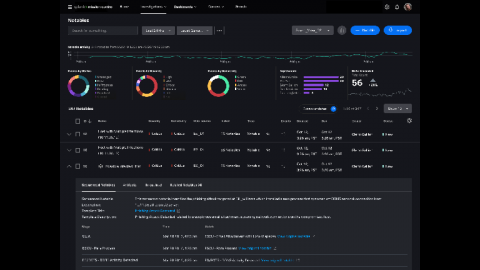
Digital attackers can compromise a system in a matter of minutes. But it generally takes organizations much longer to figure out that anything has happened. In its 2020 Data Breach Investigations Report (DBIR), for instance, Verizon Enterprise found that more than half of large organizations took days or even months to detect a security incident. Such dwell time gave attackers all they needed to move throughout an infected network and exfiltrate sensitive data.
Scope-creeping doesn’t always end up in a 0-day with a CVE assigned, and this was the fortune of Detectify Crowdsource hacker, Özgür Alp. He is an ethical hacker with 7+ years experience, well certified within offensive security and also high ranked on hacker leaderboards. Here is his success story on how he, with the help of the Detectify Crowdsource team, turned an open redirect into a public disclosed vulnerability known as CVE-2020-1323.
Veracode’s Chris Wysopal and Chris Eng recently joined Enterprise Strategy Group (ESG) Senior Analyst Dave Gruber and award-winning security writer and host of the Smashing Security podcast, Graham Cluley, at Black Hat USA to unveil the findings from a new ESG research report, Modern Application Development Security.
Cloud computing provides undeniable benefits for storing and accessing electronic health records. Files stored in the cloud are accessible anytime and anywhere from any device, which makes it easy to share critical medical information between healthcare workers. But is cloud storage secure enough to store, access and transfer sensitive personal and medical information?
Service Oriented Architecture has been one of the buzzwords in the cyber security community for a while. In this article, we will discuss what it is and how you can implement SOA security. What is Service Oriented Architecture Security? Service Oriented Architecture (also known as SOA) refers to a unique style of software design. In Service Oriented Architecture, the services are provided by application components using a communication protocol over the network.
At Splunk, we’re proud to employ some of the top security analysts in the industry. On any given day, they’re investigating security incidents, triaging alerts and identifying threats so our systems and data — as well as those of our customers — remain secure. But what, exactly, do Splunk security analysts do? And what are some of their biggest challenges?
Free and open source software (FOSS) components have become the basic building blocks of our software products, helping today’s developers build and ship innovative products faster than ever before. Many developers tend to forget that while open source licenses are free, they still come with a set of terms and conditions that users must abide by.
You work hard to produce quality applications on tight deadlines, and like every other development team out there, that often means relying on open source code to keep projects on track. Having access to plug-and-go code is invaluable when you’re racing the clock, but the accessibility of open source libraries comes with a caveat: increased risk.