Security | Threat Detection | Cyberattacks | DevSecOps | Compliance

Securing Data Flows into Your Cloud Data Warehouse

Traditionally, data security focused on protecting data at rest within the confines of your on-premise data center. The cloud era has blurred these lines. Data now flows through complex pipelines, often traversing multiple services and third-party vendors. This expanded data perimeter creates new vulnerabilities: It’s crucial to ensure that the data loaded into warehouses and analytics tools is scanned for sensitive information and redacted or redirected accordingly.
Securing Budget for TPRM: How to Convince Executives to Invest

Advocating for a larger budget is a common need for most security professionals. With so many business obligations fighting for priority and funding, even vital concerns like Vendor Risk Management can fall through the cracks. However, third-party cyber risks can devastate businesses in the blink of an eye—meaning maintaining a proper third-party risk management program should be at the top of your priority list.

How AI-powered Secure Email Gateways Fight Back vs. AI-armed Bad Actors

As bad actors use artificial intelligence to step up their phishing game, mounting an effective defense means using a secure email gateway that likewise employs AI to detect even the most cleverly crafted phishing emails and the fraudulent websites to which the emails attempt to direct recipients. The concern is not just with generative AI (GenAI) tools like ChatGPT, which has some (rather limited) guardrails to prevent nefarious use.

Will Proposed Rules for Health Industry Actually Strengthen Cybersecurity?

If you’re a US citizen, you’re likely numb to the endless letters informing you of your information being stolen yet again. For most of us, this is an annoyance and an inconvenience. But if you’re a patient in a hospital during an attack, it would be disconcerting to know that studies indicate medical errors increase by 30% when clinical applications are offline, and there’s a “small but significant” increase in patient mortality.

Protecting Sensitive Data in Snowflake through Protecto's External Tokenization

With the rapid expansion of cloud data storage and analytics, enterprises are increasingly leveraging platforms like Snowflake for their scalability and performance. However, this also introduces new challenges in data security, particularly for industries dealing with sensitive data such as finance, healthcare, and e-commerce.

What is an SQL injection and how to prevent it?

SQL Injection (SQL) also known as SQLI is a severe security vulnerability that allows attackers to interfere with the queries and applications made to its database. By inserting malicious SQL code into input fields, attackers can manipulate the database, leading to unauthorized data access, data corruption, or even complete system compromise. This attack technique is made possible because of improper coding of web applications.

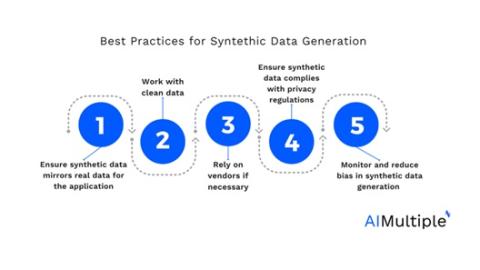
Ensuring Data Privacy in Machine Learning: The Role of Synthetic Data in Protecting PII

In today's data-driven world, machine learning (ML) models rely on vast amounts of information to power insights, automation, and decision-making. However, as organizations increasingly leverage these models, they must also address the critical challenge of protecting personally identifiable information (PII). Regulatory frameworks like GDPR, CCPA, and HIPAA place stringent requirements on how data is collected, processed, and shared, making privacy-preserving techniques essential for responsible AI and ML development.

Guarding open-source AI: Key takeaways from DeepSeek's security breach

In January 2025, within just a week of its global release, DeepSeek faced a wave of sophisticated cyberattacks. Organizations building open-source AI models and platforms are now rethinking their security strategies as they witness the unfolding consequences of DeepSeek’s vulnerabilities. The attack involved well-organized jailbreaking and DDoS assaults, according to security researchers, revealing just how quickly open platforms can be targeted.

Threat Intelligence's Role in Cybersecurity

Threat intelligence, also referred to as cyber threat intelligence (CTI), is evidence-based data that’s been collected from a variety of sources, processed, and analyzed to help both organizations and individuals understand recent cyber attacks as well as threat actors’ motivations, tactics, behaviors, and potential next steps.

Ransomware in the Global Healthcare Industry

Following the World Health Organisation (WHO) hosting a webinar to discuss the critical importance of cybersecurity in the healthcare sector, it is clear the severity of the situation the industry is facing is coming to the fore. Healthcare organizations are increasingly relying on digital systems to facilitate their daily workflow, but the prevalence of outdated legacy technology in the sector is rendering it vulnerable to cyberattacks with severe consequences.