HR teams manage some of the most sensitive data in your organization. Watch this video to learn how Keeper protects HR departments from cyber threats and helps secure employee data at every level.
BlueVoyant’s Threat Fusion Cell (TFC) and Security Operations Center (SOC) researchers have uncovered a recent cyber campaign featuring a unique twist on fake browser updates. This attack leveraged the GrimResource vulnerability and delivered the PureLogs stealer malware to targeted environments through disguised Microsoft Management Console (MSC) files.
A new and dangerous self-replicating worm has been identified targeting the JavaScript repository NPM, infecting at least 187 code packages. The novel malware strain is engineered to steal credentials from developers and publish them to a new public GitHub repository. The worm automatically propagates itself by copying its code into the top 20 most popular packages maintained by the compromised user and publishing them as new versions.
Is your VPN a silent entry point for attackers? Credential stuffing and password spraying exploit weak authentication, giving attackers a way into VPNs and edge network devices — making them prime targets in today’s identity-driven threat landscape. In this snippet, our expert breaks down: Watch the full webinar: Adapting to a New Paradigm in Security – Implementing ITDR in Your SOC: netwrix.com/go/adapting-to-a-new-paradigm-in-security-yt.
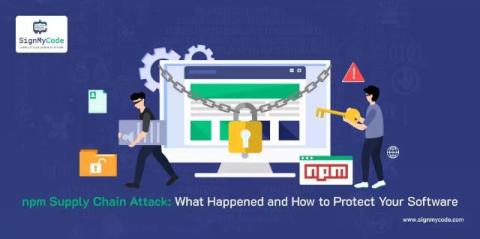
The NPM ecosystem has been rocked by one of its widest supply chain attacks to date, with over 187 popular packages compromised by advanced malware capable of self-propagation and automated credential harvesting. This attack, affecting packages with millions of weekly downloads including angulartics2, ngx-toastr, and @ctrl/tinycolor, demonstrates how cybercriminals are evolving their tactics to create “worm-like” malware that can autonomously spread across the software supply chain.
On September 15, a new supply chain attack was identified that targeted the @ctrl/tinycolor and 150 other NPM packages. The attack scenario was similar to the one used in the s1ngularity and GhostActions campaigns. The threat actors combined a local environment secrets extraction with a malicious GitHub actions workflow injection in accessible projects. The compromised packages' structure has been detailed in blog posts by socket.dev and StepSecurity.
No organization likes to contemplate being successfully hit with a cyberattack, but turning a blind eye to the possibility is the exact wrong thing to do. Digital Forensics and Incident Response (DFIR) planning and retainers, like car, home, and health insurance, are a necessity in case the unthinkable happens.
Picture this: It’s a busy weekday afternoon and your online payment platform is humming with activity. Suddenly, everything slows down. Customers complain that transactions are failing, your website goes offline, and your team scrambles to figure out what’s happening. The culprit? A Distributed Denial of Service (DDoS) attack.
On September 8, 2025, a large-scale npm supply chain attack quickly compromised 18 popular packages (with the 18 packages representing more than 2.6 billion weekly downloads within the bioinformatics ecosystem). Attackers hijacked a maintainer’s account by impersonating npm support in a phishing campaign to upload backdoored versions of popular packages like chalk, debug, ansi-styles, and supports-color.