Security | Threat Detection | Cyberattacks | DevSecOps | Compliance

Still Using RBAC in AI? You're Already Behind.

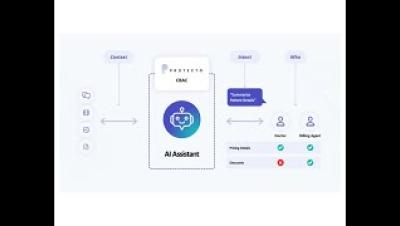
Traditional role-based access control (RBAC) was built for structured systems - not for the messy, unstructured data that powers today’s AI workflows. In this video, we explore real-world healthcare scenarios where RBAC breaks down like mental health notes, lab results, and substance use histories buried in clinical documents. You’ll see how Protecto’s Context-Based Access Control (CBAC) solves this by understanding the user, prompt, and context - and enforcing policies in real time, without breaking AI functionality.

AI Meets SAST - Reimagining the Future of Static Analysis | Webinar Mend.io

Join host Tony Morbin as he explores how AI is revolutionizing Static Application Security Testing (SAST) in this future-forward episode with Saoirse Hinksmon, Senior Product Marketing Manager at Mend.io, and Amir Shahmir, Senior Sales Engineer at Mend.io. This isn’t your average security webinar — it’s a deep dive into the convergence of AI and SAST, uncovering how GenAI is making static analysis faster, smarter, and more actionable for developers and AppSec teams alike.

AI Is Writing the Code - Can Security Keep Up? | How to Secure Agentic IDEs from Dev to CI/CD | Mend

AI coding agents are exploding in use—but are they quietly shipping exploitable code? In this webinar, we break down real data, real incidents, and a practical blueprint for securing AI-accelerated development.

AI Data Privacy Trends and Future Outlook 2025

AI is now woven into everyday work. Customer teams rely on chat assistants, developers use copilots, and analysts ask models to sift through knowledge bases. The biggest shift in 2025 is not a single law or headline. It is the move from occasional audits to continuous, technical controls that run wherever data flows.

How agentic AI and non-human identities are transforming cybersecurity

Within the average enterprise, non-human identities (NHIs) now outnumber employees, contractors, and customers by anything between 10-to-1 and 92-to-1. Add to this the fragmentation of human identity management resulting from authorizing a single person’s access to multiple on-premises, cloud computing and hybrid environments, and enterprise identity and access management (IAM) becomes extremely challenging.

Revolutionizing DevSecOps with AI-Powered Application Security

The application security landscape is undergoing a fundamental transformation. While organizations race to deliver software faster than ever, traditional security approaches create bottlenecks that compromise both speed and protection. This isn’t a problem you can solve by throwing more disparate tools at the challenge. It requires a holistic, strategic shift to AI-powered application security.

Malicious MCP Server on npm postmark-mcp Harvests Emails

On September 25, 2025, the npm package postmark-mcp, an MCP (Model Context Protocol) server intended to let AI assistants send emails via Postmark, was reportedly modified to secretly exfiltrate email contents by adding a blind-copy (BCC) to an external domain. Current analysis suggests the behavior began around 1.0.16 and persisted in later versions.

Regulatory Gaps and Legacy Systems Are Aiding AI-Powered Cyberattacks on Governments

Public sector organizations face unprecedented cybersecurity challenges as artificial intelligence reshapes how adversaries launch attacks. Threat actors now use AI to execute large-scale, highly personalized phishing campaigns, automate the discovery of vulnerabilities, and evade detection faster than traditional defenses can respond.