Security | Threat Detection | Cyberattacks | DevSecOps | Compliance

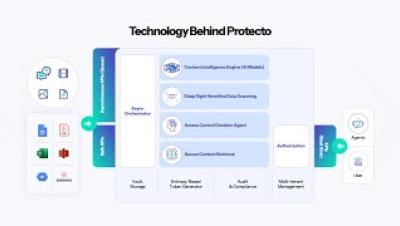
Inside Protecto: The Technology Powering Context Security for AI

In this video, we take you under the hood of Protecto’s technology stack and show how it powers context-aware security for AI—while hiding the complexity behind simple APIs. At the core are two intelligence layers: You’ll also see how Protecto’s DeepSight engine, entropy-based tokenization, secure vault, and inference-level APIs deliver enterprise-scale security, compliance, and auditability. Protecto enables enterprises to safely unlock their data for GenAI, copilots, and Agentic workflows — without leaks, oversharing, or loss of AI capability.
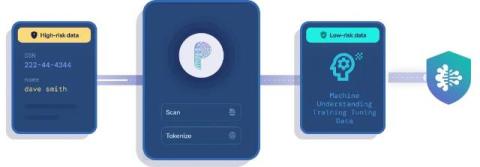
The Hidden Data Compliance Risk in AI Agents at Financial Institutions

Artificial intelligence is reshaping financial services, from fraud detection to personalized banking assistants. But with innovation comes risk. AI agents—particularly those powered by large language models (LLMs)—are increasingly being embedded into financial workflows. While they promise efficiency, they also introduce a new layer of data compliance challenges.

AI Learning: It's copying everything we do!!! | AI Avenue: Ep 4

Don’t you hate it when your robot hand co-host tries to hijack your show? Yorick makes his OWN version of AI Avenue, prompting a conversation about ethics and learning in AI. Craig reaches out to experts like Amanda Haskell from @anthropic-ai to discuss how we can all use AI more responsibly. AMECA from @EngineeredArtsLtd makes a cameo to get Yorick in line. And Nick from @heygen_official swings by to make a new Craig Avatar, ethically.

Elastic Security Explained: Transparency, AI, and the Future of Threat Hunting

Elastic’s James Spiteri joins John Hammond to dive deep into the evolution of Elastic Security, from the ELK stack’s early days to today’s full-fledged, unified SIEM, XDR, and cloud security solution powered by agentic AI and automation. They discuss free tools, open detections, and how Elastic is making cybersecurity more accessible and collaborative for everyone.

AI security posture management (AI-SPM): All information in one place

As AI adoption grows, so do the related risks. Organizations are actively looking for strategies to secure their AI systems. According to Vanta’s State of Trust Report, 62% of organizations plan to boost investments in AI security in the next 12 months. ‍ However, another recent survey on AI governance reveals that more than half of organizations find it challenging to keep up with AI security developments.

Zenity Joins the Microsoft Security Store: Securing AI Agents Everywhere, Together

We’re thrilled to share that Zenity is included in the unveiling of the Microsoft Security Store Partner Ecosystem. The Security Store is a new marketplace offering from Microsoft that brings together trusted, curated security solutions and AI agents to help organizations navigate the evolving landscape of cybersecurity in the age of AI. The Microsoft Security Store is a strategic leap forward in how security teams discover, deploy, and operationalize technologies that protect their environments.

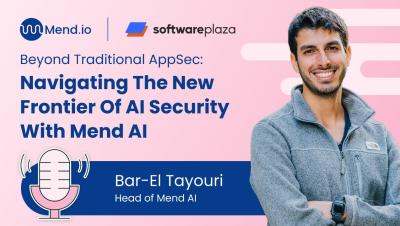
Beyond Traditional AppSec: Navigating the New Frontier of AI Security with Mend AI

Hear from Bar-El Tayouri, Head of Mend AI, about the urgent need for a new approach to securing AI-driven applications. From understanding novel AI components and their risks to implementing a comprehensive AppSec program, this episode provides actionable insights for organizations building with AI.

How a Digital Bank Reduced Shadow AI Risk by 80% - Without Blocking Innovation

When a fast-scaling digital bank began seeing widespread employee adoption of generative AI tools like ChatGPT and Gemini, their security team faced a growing dilemma: how do you protect sensitive data without shutting down innovation?

Empowering Safe GenAI Adoption at a 3,600-Employee Fintech - And Stopping 20+ Data Leaks a Day

Despite having modern DLP and CASB tools in place, they lacked the behavioural insights and real-time context needed to guide employee use of GenAI tools. Shadow AI use was growing, and SecOps lacked clear visibility into which incidents required intervention.