Security | Threat Detection | Cyberattacks | DevSecOps | Compliance

Salt Code: Stop Reviewing Al Code Start Governing It

AI coding assistants are generating APIs, MCP integrations, agent tools, and application logic faster than your security team can review them. And none of them are trained on your internal security standards, industry frameworks, or regulatory requirements. Salt Code changes that. Join us for this product launch and see how Salt governs AI-generated code from the first prompt through runtime, without slowing your developers down.

Why Agentic AI Is Finance's Biggest Security Blind Spot

An AI agent with access to a customer’s brokerage account can begin executing trades. Not because the customer asked. Because someone, somewhere upstream, slipped a hidden instruction into a tool the agent loaded at startup. The agent is doing exactly what it was told. Just not by the customer. This is not a hypothetical. It is the attack class that financial security teams have exactly zero legacy tooling to catch and it is arriving precisely as banks accelerate their agentic AI ambitions.

CrowdStrike Announces Continuous Identity for AI Agents

Identity security has long been built around a simple premise: Authenticate a user, grant access, and trust that decision until their next login. While for many this model worked well enough when identities were primarily human and access patterns were predictable, that’s no longer the case for humans and definitely not the case for AI agents.

The Government Just Banned an AI Model. An Engineer's Perspective.

I've spent the better part of three years wiring AI into how my teams build and ship software. So when the news broke this week that the US government had effectively switched off an AI model, I was legitimately shocked. Not for one country. Not for one company. For everyone on the planet, all at once. Three days. That's how long Anthropic's Fable 5 and Mythos 5 models were available before the government ordered them shut off for everyone.

Governance and Security Are Different Problems: Agentic AI Is Exposing the Gap Between Them

Many organizations still use the terms AI governance and AI security interchangeably. While they are closely related, they address fundamentally different challenges. Governance establishes accountability, defines acceptable use, manages risk, and helps organizations align AI adoption with business, legal, and regulatory requirements. Security focuses on understanding and controlling behavior.

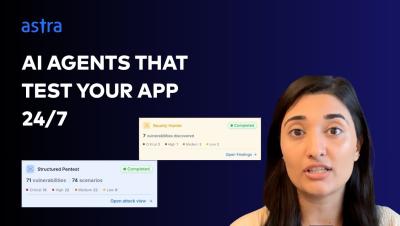
We Pointed an Autonomous AI Pentester at a Deliberately Broken API. It Came Back With a Root Shell

AigentX, our autonomous web-application penetration testing agent, ran black-box against OWASP crAPI and confirmed 35 exploitable findings, 15 of them Critical, including a chain that turns a free signup account into uid=0(root) and a permanently forged admin identity. Every finding below carries a request, a response, and a reproduction. The full report is one click away. Most “AI found N vulnerabilities” write-ups never let you check the work. This one does.

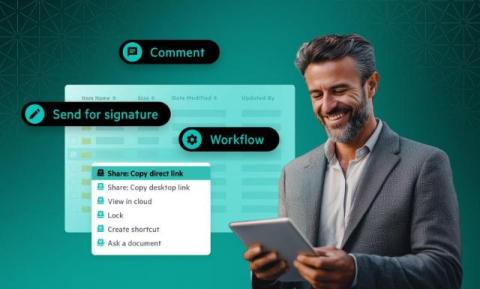
The Future of AI-Powered Enterprise Workflow Automation: Egnyte + StackAI

Egnyte is excited to partner with StackAI—an enterprise AI platform trusted by organizations across financial services, life sciences, construction, and more—to bring AI-powered workflow automation directly to your content environment. For organizations that rely on Egnyte to store, govern, and share business-critical documents, this integration means you can now put that content to work with AI, without sacrificing security or governance.

Agentic AI Security in 2026: What to Know

Organizations are rapidly deploying autonomous and semi-autonomous AI agents that can make decisions, execute tasks and interact directly with systems without constant human oversight. That shift is driving investment, with the global agentic AI in cybersecurity market projected to grow to $322.39 billion by 2033. The surge represents enormous gains in efficiency and agility — and also signals a dramatic increase in risk.

The CIO's AI Security Checklist: 10 Questions Before Deploying Agents

You approved the AI tools. You funded the infrastructure. Now your teams want to deploy AI agents, and the ask sounds reasonable: automate the research workflow, connect the agent to the CRM, let it draft and send. The productivity case is clear. What is less clear is who owns the security exposure when that agent starts moving data across systems it was never explicitly authorized to touch. The answer, increasingly, is you.