Security | Threat Detection | Cyberattacks | DevSecOps | Compliance

Speed vs Security: Striking the Right Balance in Software Development with AI

Software development teams face a constant dilemma: striking the right balance between speed and security. How is artificial intelligence (AI) impacting this dilemma? With the increasing use of AI in the development process, it's essential to understand the risks involved and how we can maintain a secure environment without compromising on speed. Let’s dive in.


Protecto - AI Regulations and Governance Monthly Update - March 2024

In a landmark development, the U.S. Department of Homeland Security (DHS) has unveiled its pioneering Artificial Intelligence Roadmap, marking a significant stride towards incorporating generative AI models into federal agencies' operations. Under the leadership of Secretary Alejandro N. Mayorkas and Chief Information Officer Eric Hysen, DHS aims to harness AI technologies to bolster national security while safeguarding individual privacy and civil liberties.

An investigation into code injection vulnerabilities caused by generative AI

Generative AI is an exciting technology that is now easily available through cloud APIs provided by companies such as Google and OpenAI. While it’s a powerful tool, the use of generative AI within code opens up additional security considerations that developers must take into account to ensure that their applications remain secure. In this article, we look at the potential security implications of large language models (LLMs), a text-producing form of generative AI.

Casting a Cybersecurity Net to Secure Generative AI in Manufacturing

Generative AI has exploded in popularity across many industries. While this technology has many benefits, it also raises some unique cybersecurity concerns. Securing AI must be a top priority for organizations as they rush to implement these tools. The use of generative AI in manufacturing poses particular challenges. Over one-third of manufacturers plan to invest in this technology, making it the industry's fourth most common strategic business change.

How AI will impact cybersecurity: the beginning of fifth-gen SIEM

The power of artificial intelligence (AI) and machine learning (ML) is a double-edged sword — empowering cybercriminals and cybersecurity professionals alike. AI, particularly generative AI’s ability to automate tasks, extract information from vast amounts of data, and generate communications and media indistinguishable from the real thing, can all be used to enhance cyberattacks and campaigns.

Understanding AI Package Hallucination: The latest dependency security threat

In this video, we explore AI package Hallucination. This threat is a result of AI generation tools hallucinating open-source packages or libraries that don't exist. In this video, we explore why this happens and show a demo of ChatGPT creating multiple packages that don't exist. We also explain why this is a prominent threat and how malicious hackers could harness this new vulnerability for evil. It is the next evolution of Typo Squatting.

The NIST AI Risk Management Framework: Building Trust in AI

The NIST Artificial Intelligence Risk Management Framework (AI RMF) is a recent framework developed by The National Institute of Standards and Technology (NIST) to guide organizations across all sectors in the use of artificial intelligence (AI) and its systems. As AI continues to become implemented in nearly every sector — from healthcare to finance to national defense — it also brings new risks and concerns with it.

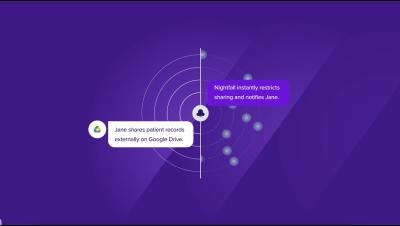
Nightfall AI: The First AI-Native Enterprise DLP Platform

Legacy DLP solutions never worked. They're point solutions that generate an overwhelming number of false positive alerts, and block the business in the process. But no longer. Enter: Nightfall AI, the first AI-native enterprise DLP platform that protects sensitive data across SaaS, generative AI (GenAI), email, and endpoints, all from the convenience of a unified console.

Best LLM Security Tools of 2024: Safeguarding Your Large Language Models

As large language models (LLMs) continue to push the boundaries of natural language processing, their widespread adoption across various industries has highlighted the critical need for robust security measures. These powerful AI systems, while immensely beneficial, are not immune to potential risks and vulnerabilities. In 2024, the landscape of LLM security tools has evolved to address the unique challenges posed by these advanced models, ensuring their safe and responsible deployment.