Security | Threat Detection | Cyberattacks | DevSecOps | Compliance

Notepad++ Supply Chain Attack Explained | CrowdStrike OverWatch Identified It Months Early

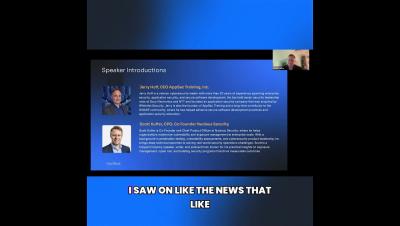
Your next software update could be weaponized. In this short breakdown, we examine how adversaries compromised the Notepad++ update mechanism to distribute malware and how CrowdStrike identified the activity four months before public disclosure.

Is AI Making Us Mentally Lazy? The Hidden Security Risk of Cognitive Offloading

Modern aviation offers a powerful warning about overreliance on automation. When autopilot systems became highly advanced, pilots transitioned from hands-on flying to supervising computer-driven controls. Efficiency improved-but skill degradation followed. In rare moments when automation failed, even seasoned pilots sometimes struggled with basic manual maneuvers.

Disclosure: XWiki CSS Injection (CVE-2026-26000)

During independent security research, a CSS injection vulnerability (CVE-2026-26000) was identified in the XWiki platform. XWiki is an open-source enterprise wiki and collaboration platform commonly used for internal documentation and knowledge management. According to XWiki, the platform has over 8,000 active installations and is used by organisations such as Lenovo and Amazon, meaning vulnerabilities can affect a large and diverse user base.

EventLog-in: Propagating With Weak Credentials Using the Eventlog Service in Microsoft Windows (CVE-2025-29969)

While attackers often find low-privileged credentials after creating a process dump of LSASS or harvesting hashes with a tool like Responder, they are rarely able to do anything with those credentials (RDP aside). We set out to discover how malicious actors might exploit Microsoft Windows remote procedure call (RPC) protocols to gather data remotely as a low-privileged user using RPC as an attack surface.

Vulnerability Remediation: From Scan Results to Real Fixes

Vulnerability scanning is useless if you don’t fix what you find. This short breaks down a practical vulnerability remediation process to prioritize risk, patch faster, and reduce real-world exposure. Learn how security teams move from detection to closure, without months of backlog.

How "Clinejection" Turned an AI Bot into a Supply Chain Attack

On February 9, 2026, security researcher Adnan Khan publicly disclosed a vulnerability chain (dubbed "Clinejection") in the Cline repository that turned the popular AI coding tool's own issue triage bot into a supply chain attack vector. Eight days later, an unknown actor exploited the same flaw to publish an unauthorized version of the Cline CLI to npm, installing the OpenClaw AI agent on every developer machine that updated during an eight-hour window.

Why Patching Cadence Should Be a Risk Priority in 2026

Patching cadence is a critical component of maintaining an organization’s cybersecurity posture. It refers not just to whether patches are applied, but how quickly and consistently vulnerabilities are addressed across systems and software. A regular, timely patching process reduces the window of exposure to known vulnerabilities, limiting opportunities for exploitation and strengthening overall vulnerability management.

Remediate transitive vulnerabilities faster with Datadog Software Composition Analysis

Security teams are responsible for finding and remediating vulnerable dependencies within applications that are built from large ecosystems of frameworks, SDKs, and utilities. What makes this task especially challenging is that these dependencies can pull in dozens or even hundreds of transitive dependencies through complex dependency chains. Even when scanners identify what’s vulnerable, teams still often lack the information they need about the dependency chain to safely address the issue.