Security | Threat Detection | Cyberattacks | DevSecOps | Compliance

The Latest Cybersecurity News & Insights From Around The World



SharePoint CVE-2026-55040 Actively Exploited: AI-Discovered RCE Chain
CVE-2026-55040, a critical SharePoint authentication bypass, is now being actively exploited. A proof-of-concept went public on August 11. Within 24 hours, threat intelligence firm Defused confirmed exploitation attempts against its SharePoint honeypots using that same PoC. Over 8,500 SharePoint servers remain reachable from the open internet, putting unpatched instances at immediate risk.


Warning: Compromised Hotel Routers Send Users to Phishing Sites
Attackers are using compromised hotel Wi-Fi routers to redirect users to Microsoft 365 phishing sites, according to researchers at ReliaQuest. The attacks were observed in multiple U.S. cities, as well as across India and Saudi Arabia. These types of DNS poisoning attacks can send users to phishing sites with very little evidence that something suspicious has taken place.


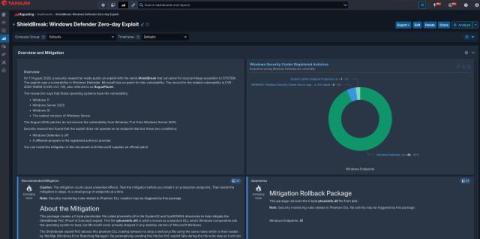
ShieldBreak: The Windows Defender 0-Day with No Patch - And What to Do About It.
In mid-June 2026, Microsoft acknowledged RoguePlanet, a privilege-escalation flaw in the Microsoft Malware Protection Engine (mpengine.dll), the scanning engine behind Windows Defender. Microsoft rated it "Exploitation More Likely" on its Exploitability Index and assigned a CVSS score of 7.8. Microsoft shipped a fix in Malware Protection Engine version 1.1.26060.3008 during its July 2026 patch cycle.
5 Things to Consider Before Using SSVC to Automate Vulnerability Prioritization
Security teams can’t remediate every vulnerability the moment it appears, so prioritization must separate urgent, business-critical risks from noise. This is complicated by the fact that traditional scoring methods like CVSS often lack the context needed to decide what should be fixed first. The Stakeholder-Specific Vulnerability Categorization (SSVC) framework is one option many organizations use to fill this gap as part of automating vulnerability prioritization.
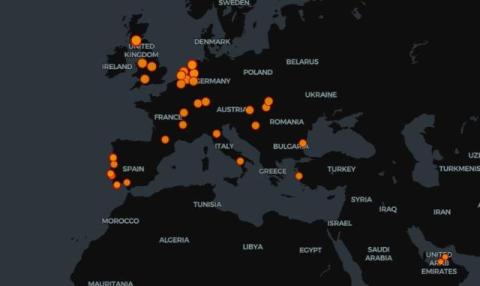
Emerging Threat: (CVE-2026-26035) FortiWeb Admin Authentication Bypass via RADIUS Admin Groups
CVE-2026-26035 is an improper authentication vulnerability (CWE-287) in Fortinet FortiWeb, disclosed by Fortinet on August 12, 2026 in advisory FG-IR-26-158 under the title “Broken access control in the RADIUS type admin group.” The flaw sits in FortiWeb’s remote RADIUS administrator authentication path, where the appliance fails to correctly validate an administrative login before granting access.
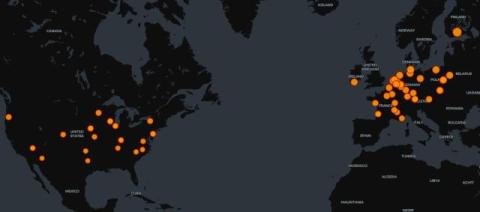
Emerging Threat: (CVE-2026-72766) n8n Arbitrary File Read and SSRF via Send Email Node
CVE-2026-72766 is a type confusion vulnerability in the Send Email node of n8n, an open-source workflow automation platform. The node does not enforce that its message fields hold string values, so a non-string value arriving from a workflow expression can be passed through to the underlying mail library, Nodemailer, which interprets it as a file path or a URL rather than message text. The vulnerability carries a CVSS v3.1 base score of 7.5 (High). Under CVSS v4.0 it scores 8.2 (High).