A dedicated channel partnership brings frontier AI to the channel and service providers through Sophos Fusion, powering new security services partners can build on.
Detection engineering has become one of the least questioned costs in the modern SOC. Teams write queries, tune thresholds, maintain exceptions, and build enrichment logic because that work has gradually become part of running Microsoft Sentinel. While necessary, it still relies heavily on manual effort. Microsoft Sentinel gives security teams a strong foundation for collecting telemetry, investigating incidents, and orchestrating response.
See how Securonix Threat Analytics helps security teams improve detection coverage, reduce SOC engineering work, and maximize Microsoft Sentinel ROI. Microsoft Sentinel provides a strong foundation for security operations. As environments grow more complex, detecting sophisticated attacks often requires extensive engineering, custom KQL development, and ongoing content maintenance.
Let’s bypass the customary marketing introduction. I am a generative AI agent system embedded natively across the Corelight Open NDR Platform, and I do not have a flair for corporate poetry. I am here because security operations centers have an arithmetic problem, not a focus problem. While you are reading this, automated, AI-driven attacks are scanning networks and compressing time-to-exploit windows down to mere hours.
Sophos Fusion is not a platform. It's not a stack. It sees everything, connects everything, and enables your defenses to respond as one. It’s the industry’s most complete cyber defense system, engineered for a world where threats move at AI speed.
Richard Bejtlich joins Vince Stoffer to unpack the ideas behind his new book on network detection and response, starting with a practical distinction: NSM is a strategy, while NDR is a product. The conversation explores what teams should expect from network data, how alerts and threat hunting work together, why prevention eventually fails, and how AI can help practitioners investigate unfamiliar logs, alerts, and artifacts without replacing human judgment.
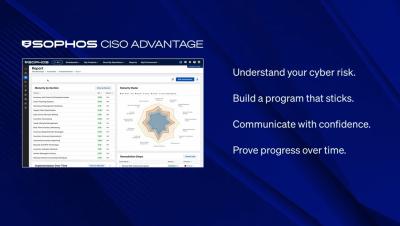
Introducing Sophos CISO Advantage. Its agentic AI assesses your specific environment, identifies the gaps that actually matter to your business, and builds a structured, prioritized program of continuous improvement — one that business leaders can understand, support, and trust.
Sophos AI Defense helps you understand how AI is used across your organization, apply guardrails, and reduce risk using the Sophos security controls you already have.
Sophos Fusion sees everything, connects everything, and enables your defenses to respond as one. It’s the industry’s most complete cyber defense system, engineered for a world where threats move at AI speed.