Security | Threat Detection | Cyberattacks | DevSecOps | Compliance

The Anatomy of a Pentest: Where Does AI Change the Game?

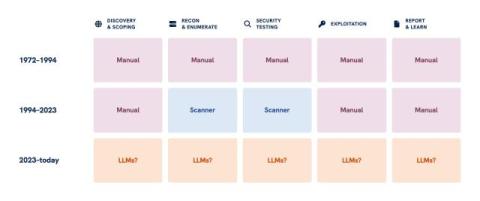
Two weeks ago I sat in on a webinar where CyCognito’s founders walked through continuous AI pentesting. The framing stayed with me: the pentest itself has not changed, only who runs each part of it. AI has reached nearly every corner of cybersecurity, and pentesting is no exception. The promise is an agent that probes applications, uncovers flaws scanners miss, and delivers a report before a human tester has finished scoping the engagement.


Havoc Malware: Techniques, Targets, and Threat Overview

Security analysts have noticed a trend among threat actors shifting towards adopting a novel open-source command and control (C2) framework called Havoc as an alternative to paid solutions like Cobalt Strike and Brute Ratel. Developed in the C language and introduced in 2022, Havoc’s Main branch received updates in 2023.

Repair or Replace? How to Decide When an Appliance Breaks Down

A broken appliance forces a decision that's rarely as simple as it first appears: fix the current unit or replace it entirely. Making that call well requires weighing a few concrete factors rather than defaulting to whichever option feels easier in the moment.

How Accurate Are CRQ Models? Understanding Statistical Significance

Cyber risk quantification (CRQ) models are as accurate as the data and methodology behind them, and the conversation about CRQ accuracy that plays out across security and finance teams is often stuck on the wrong question. Risk is about future events that may or may not happen, and if they do, the impact will vary. ‍ Looking for certainty in a probabilistic model is a category error. The useful question is not whether a CRQ model produces the "right" number.

How AI-Related Security Incidents Should Be Identified and Managed

AI-related security incident detection starts with knowing what AI systems are running across the organization. Without a complete, continuously updated inventory of sanctioned, shadow, and third-party AI tools, security teams cannot detect incidents involving systems they do not know exist. From there, effective incident management requires a structured response framework that connects detection to containment, investigation, remediation, regulatory notification, and governance integration. ‍

Critical Infrastructure Protection Programs Explained

A ransomware advisory lands in your inbox before the morning standup, and the room goes quiet. The water utility's firewall logs are in one console, the endpoint alerts are in another, and the OT sensor feed lives somewhere else entirely. Everyone can see a piece of the story, but no one can see the whole incident. That's the part teams feel first. Not the theory, not the policy language, just the blunt realization that point tools don't become a program on their own.

FedRAMP Boundary Diagrams: Mistakes to Avoid

There are a lot of reasons why organizations fail their FedRAMP audits and are denied the authorization they need to work on government contracts. We've even covered a lot of them here on the Ignyte blog in the past. One area that we haven't covered, in detail at least, is mistakes with the FedRAMP boundary. Not just the boundary, either, but with the diagrams that track and prove it.

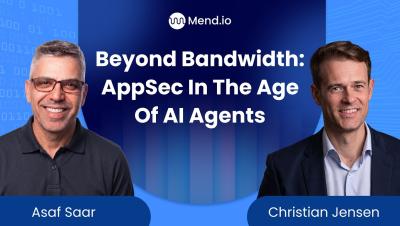
AppSec: When Bandwidth Isn't the Bottleneck

AppSec teams are frequently told that a lack of bandwidth is why vulnerability backlogs keep growing. In reality, the bottleneck is not team size, it is the lack of contextual prioritization and agentic triage. When traditional scanners hand security teams thousands of findings without reachability context, developer velocity stalls. In this webinar, Mend.io security experts unpack why bandwidth is not the real bottleneck in modern software security and show you how to streamline triage, automate remediation, and secure code at AI speed.