Security | Threat Detection | Cyberattacks | DevSecOps | Compliance

AI Governance Where the Regulator Also Runs the Market

AI governance evidence is usually prepared for a neutral reader. A regulator with no stake in the market, an auditor with no competing product, an examiner who gains nothing from what the documentation contains. ‍ In securities and derivatives markets that assumption does not hold. Exchanges and clearing organizations register as self-regulatory organizations, and most of them operate the market while regulating its participants. The reader of your evidence is also an operator. ‍
See Falcon for XIoT in Action.

CrowdStrike's Falcon for XIoT addresses challenges in managing complex industrial and clinical environments by providing visibility into operational assets. The solution helps teams prioritize vulnerabilities based on operational impact rather than severity alone, ensuring safe decisions while minimizing interruptions. Through a detailed investigation process, users can assess asset profiles, validate exposures, and implement controlled responses tailored to specific risks. This approach optimizes asset management and enhances safety in both operational technology (OT) and clinical settings.

Securing Your AI Agents: Native AI Detection and Response Across the Full Agentic Path

Enterprises are deploying AI agents at scale, and those agents are taking real business actions. Through LLMs, MCP servers, and APIs, they move money, access patient records, modify code, and send emails. The attack surface has fundamentally shifted, but most security programs are still focused on what an AI says rather than what it does.

Governing at the speed of AI: What IT leaders need to know

AI is reshaping the IT leadership role faster than any shift in the last decade. As AI makes it dramatically easier to build software (agents, apps, automations, and more), the volume of software entering the enterprise is far beyond what IT teams have had to govern before. That shift demands new ways of thinking about enterprise control: how security, access, and oversight evolve to keep pace with software that's built faster and by far more people than ever before. The leaders who treat this as an operating shift, not just a technical one, are the ones expanding their influence.

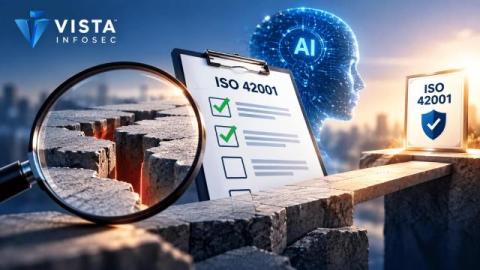
ISO 42001 Gap Analysis: What to Check Before Starting Certification

An ISO 42001 gap analysis compares how you govern AI today with what ISO/IEC 42001:2023 requires. Do it before you commit to audit dates. You’ll learn what’s missing, what you can’t yet prove and what to fix first. Quick answer What it is: a structured review of your AI management system (AIMS) against ISO/IEC 42001:2023 clauses 4–10 and the applicable Annex A controls. Is it mandatory? No. The standard requires an internal audit and management review, not a gap analysis.

Understanding Asymmetric Routing Risks in Modern Firewall Deployments

In modern network environments, maintaining both operational efficiency and strong security controls requires careful design and planning. One of the more common challenges Sophos Professional Services encounters, especially during firewall upgrades or redesigns, is asymmetric routing.

The Attribution Trap: What Happens When Threat Actors Manipulate the Story of an Attack?

Imagine waking up Monday morning to discover you’ve been breached. The attacker has stolen sensitive financial data, set up persistent access, and then greets you with a lovely ransom note at 8:00 a.m. demanding money in exchange for the encryption key. Immediately, you reach out to your security operations team, and they quickly begin assessing the damage and reviewing the breadcrumbs left behind.

What Is Cyber Insurance? Why Is It Important?

Cyberattacks can disrupt business operations to the extent that it may take days or even weeks for businesses to restore their operations. Attackers can expose sensitive data, selling it on the dark web or using it to extort ransom payments from organizations. While there are cybersecurity measures that organizations can take, those measures only prevent and respond to these incidents rather than stopping them entirely. This is where cybersecurity insurance becomes important.