
Security | Threat Detection | Cyberattacks | DevSecOps | Compliance

Douglas Lemott Jr. Draws on Decades of Military Leadership to Protect the Critical Systems the U.S. Depends On

Douglas Lemott Jr. oversees cybersecurity at the Analysis and Resilience Center for Systemic Risk, also known as ARC. As Chief Information Security Officer, he's responsible for protecting the systems that enable major companies to collaborate when the national infrastructure is at risk. These companies operate in essential sectors like power, finance, and communications. If something goes wrong, ARC members must be able to communicate and act quickly to resolve the issue.


Data-Driven Innovation: How Smart Insights Are Reshaping Modern Business

In today's digital-first world, the line between business decisions and data is disappearing fast. Every click, transaction, and interaction generates information, and the companies that know how to interpret this information gain a significant advantage over those that don't. The result is a new era where data-driven innovation is no longer a luxury or a technical concept-it's a fundamental business necessity.

ARP spoofing explained: How attackers exploit the Address Resolution Protocol

Imagine handing over your house keys to someone who looked trustworthy - only to discover later they were an impostor. Everything that entered or left your home was compromised, and you never saw it coming. That’s what happens in your network when ARP spoofing strikes. The Address Resolution Protocol (ARP) helps devices find each other on a local network by matching IP addresses to MAC addresses.

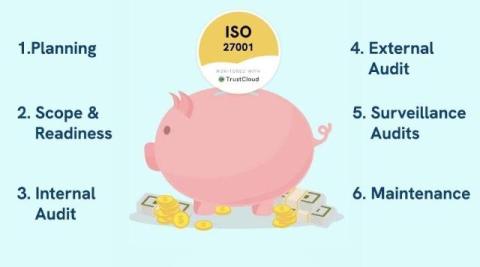
ISO 27001 certification: Cost, process, timelines and implementation in 2025

In this article Businesses looking for serious compliance street cred often turn first to ISO 27001. ISO 27001 is a globally recognized framework that outlines and defines information security management system (ISMS) requirements. Because being ISO 27001 certified demonstrates an organization meets best practices for information security, ISO certification can give businesses a significant competitive advantage. If you’re weighing ISO 27001 vs.

Why Omdia recommends Extended Access Management to simplify compliance

Omdia, a global analyst and advisory leader, recently released a report called “How Extended Access Management (XAM) closes the gaps in security.” This report describes how existing approaches to access management have failed to address the security, budgetary, and compliance risks posed by unmanaged identities, applications, and devices.

How Secure Is WhatsApp in 2025? [Appknox's Pentesters Reveal 5 Critical Vulnerabilities]

June 2025 has seen WhatsApp back in the headlines—this time for all the wrong reasons. Earlier this month, The National broke the story: WhatsApp’s security is under renewed scrutiny following revelations that Israel remains the only known actor to have successfully exploited it. But if history has taught us anything, it’s this: if one nation-state can do it, others may follow. At Appknox, we decided to verify the current state of WhatsApp’s mobile app security for ourselves.

Inside Qilin's New Legal Pressure Tactic: How 'Call a Lawyer' Increases Ransomware Success

In the cybercrime ecosystem, innovation often comes in disturbing forms. The ransomware group Qilin—already notorious for offering a full suite of extortion tools to affiliates—has introduced a new feature that elevates psychological warfare to a new level: a “Call a Lawyer” button. This isn’t satire. This is real social engineering, now backed with actual legal threats.

Credential Theft Campaign Targets Legal Sector via Spoofed Emails Delivering Malicious HTM File Mimicking O365 Login Page

Arctic Wolf has recently observed a campaign targeting the legal industry using a combination of brute-force and spearphishing techniques. Threat actors initially attempted to brute-force multiple user accounts. After those efforts were unsuccessful, they pivoted to spearphishing by sending spoofed emails that appeared to originate from internal users. These emails used the subject line “Reminder-Your-to-do-list” and contained a malicious.HTM attachment.