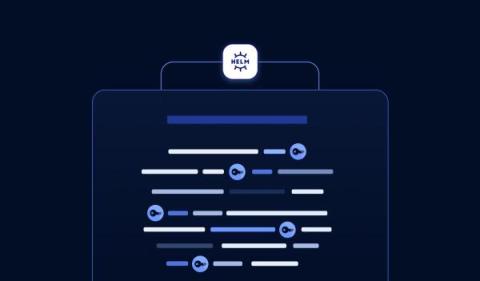
How to Handle Secrets in Helm
Learn step-by-step techniques and best practices to handle secrets in Helm charts safely and effectively. Level up your Helm deployments today!


Learn step-by-step techniques and best practices to handle secrets in Helm charts safely and effectively. Level up your Helm deployments today!
Welcome to our comprehensive guide on ‘Conducting an ISO 27001 Risk Assessment’. This blog is designed to equip you with effective strategies for a successful risk assessment, incorporating the principles of ISO 31000 risk management. Risk assessment is a vital component of a robust information security framework and is in alignment with ISO 31000.
The growing network perimeter is a fact of life. Attacks on corporate networks can take many forms, such as viruses, backdoors, denial of service (DoS) attacks, macros, remote logins, phishing emails, social engineering, and spam. In this evolving threat landscape, firewalls continue to play a key role in securing our networks and devices.
Right now, organisations using AI cybersecurity tools like SenseOn can improve their cybersecurity in three core ways: But, in the future, one of the most significant benefits of AI will be its ability to protect organisations from….AI. To see why, let’s jump into a time machine.
In this blog, lets focus on the intersection of psychology and technology, where cybercriminals manipulate human psychology through digital means to achieve their objectives. Our world has become more interconnected over time, and this has given rise to an entirely new breed of criminal masterminds: digital criminals with deep psychological insights who use technology as the ultimate battlefield for social engineering activities.
At Nightfall, we’re guided by our customers who trust us to safeguard their sensitive data for every application and AI tool. That’s why we’ve launched Nightfall for Notion as another step in making it simple and seamless for customers to protect their valuable company and customer information.