

Security | Threat Detection | Cyberattacks | DevSecOps | Compliance

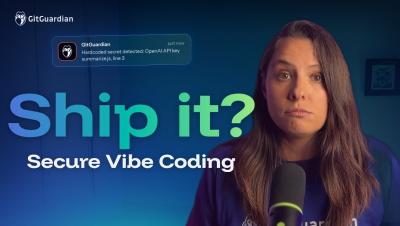
Vibe Coding Has a Security Problem (And How to Fix)

I vibe coded a working app in 10 minutes without writing a single line of code. It ran fine. It also had a hardcoded API key, a database password sitting in a Model Context Protocol (MCP) config file, and an npm package I never checked. In episode one of Secure Vibe Coding, we look at what AI-assisted coding means for secrets security, using data from GitGuardian's State of Secrets Sprawl 2026 report.

Best practices for configuring role-based access control (RBAC) in Tines 3B

Learn how to configure role-based access control (RBAC) in Tines 3B so your teams have the access they need as your organization grows. Jamie Gaynor joins Eoin Magner, a Senior Forward Deployed Engineer at Tines, to walk through practical recommendations for organizing groups, assigning space permissions, and making user access easier to manage. In this video: Whether you’re setting up your tenant or bringing more teams into Tines, start with an access structure you can reuse.

Is "SIEM-less" really what it sounds like?

SIEM-less security may sound like an escape from traditional SIEM complexity and costs, but the underlying capabilities still have to exist somewhere. A SIEM is a multipurpose tool. It brings together cyber and physical security use cases; drives threat detection, investigation, and response (TDIR); serves as a system of record for governance, regulatory, and compliance needs; and supports observability use cases tied to resilience and service degradation. The list goes on.

Node2Shell / HTTP2Shell (CVE-2026-111497): Brotli Library RCE

On October 21, 2026, Node.js fixed CVE-2026-111497, now known as Node2Shell. The bug is in its bundled Brotli decoder, the component that unpacks compressed data. A crafted compressed stream makes the decoder write data outside the memory set aside for it, known as an out-of-bounds write. That can overwrite data the application relies on, so an attacker can crash the application, leak memory or run attacker code. Public proof-of-concept code was published within 24 hours.

You only need AI tokens to become a hacker

AI has removed the skill, personalization, and speed barriers that once limited cyberattacks. Attackers use language models at every stage of the kill chain, from recon to persistence, and underground tools sell pre-jailbroken access to mainstream models for as little as $50 a week. But because every attack still has to change a file, a configuration, or a script on a real system, detecting unplanned change works no matter which model wrote the payload.

From Telecom Chaos to One Hub: How CommsHub Is Rethinking Business Messaging

Business messaging often starts with a very modest setup. A company connects one SMS provider, adds a few transactional templates and assumes the job is more or less done. Then the business enters another market, introduces login codes, adds promotional campaigns and discovers that the original setup has quietly turned into a tangle of APIs, dashboards, contracts and support chats.