The Hunt or be Hunted series tells the hunt stories. HuntIQ Tradecraft, now live on the Tanium Resource Center, gives you the playbooks to run them yourself.
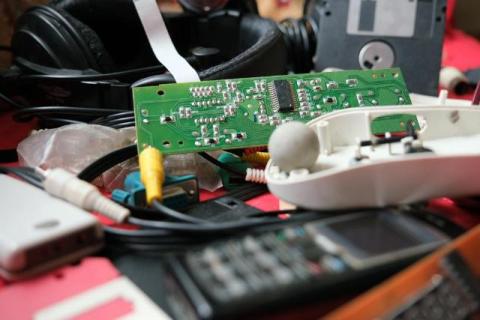
The security team at a mid-sized insurer spent eighteen months hardening everything that faced the internet. They rotated credentials, tightened their identity provider, and ran tabletop exercises until the incident playbook felt routine. Then a contractor bought a pallet of decommissioned laptops at a regional auction and found four of them still booting into a cached domain profile. Nothing had been breached. The data simply walked out through the loading dock, on equipment the company had already stopped thinking about.
Our digital and physical worlds are now closely linked. This connection brings incredible efficiency, but it also creates new vulnerabilities. When digital systems control physical infrastructure, a security failure can have real, tangible consequences. Protecting your assets today means having a strategy that tackles threats in both these areas at the same time.
MovieReaper is a malware family first observed in September 2026 that combines remote-access trojan and loader functionality in a modular, multi-stage framework. It targets x86-64 systems and is built to reach remote machines, install additional components, persist across reboots, and exfiltrate data while resisting analysis through anti-sandbox, anti-VM, and AV-evasion features.
Ask a governance lead which of their AI controls actually ran last Tuesday at 2:14 p.m., when a specific agent touched a specific dataset, and the answer usually arrives as a policy document, an org chart, and a shrug. That gap between the controls a program claims to have and the controls that actually fired when an agent acted is where AI governance quietly fails. Policy documents describe intent. Model monitoring tracks accuracy and drift.
An AI product sold in Europe is described as facing two incident reporting duties. One under product security rules and one under AI rules, with different triggers and different deadlines. Only one of them is running. Article 14 of the Cyber Resilience Act has applied since 11 September 2026. The AI duty moved, and coverage published in the last few weeks still describes it as live.
Insurers are subject to AI governance rules and they are also the party asking other organizations AI governance questions as a condition of coverage. More than twenty states have adopted the model bulletin that turns AI oversight into an operational requirement for carriers, and those same carriers now send AI questionnaires to their corporate insureds. The sector facing both is well covered. What follows from it is not, and it produces something an insured can use.
An incident story can sound impressively clear once everyone knows how it ended. The suspicious login becomes an obvious warning, the escalation looks inevitable, and the response appears to follow a straight path. A security interviewer needs to look earlier in the story, when the candidate had incomplete information and still had to choose what to do.
Most professionals don't have a clear picture of how their skills compared to what employers are actually looking for. This is a gap that career coaching has traditionally tried to fill, but the process was often slow and based on limited information. AI now makes it possible to assess your skills accurately and get direct, data-backed guidance on what to improve. In this article, we'll look at how AI is changing skill assessment, professional growth, and the broader career development process - from the moment you evaluate your abilities to the moment you land a role that actually fits.
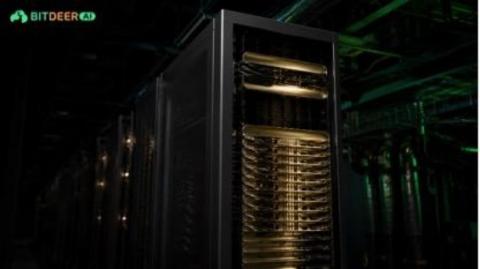
Every mining cycle returns to the same unromantic question: what does one megawatt earn after the electricity bill? As hashprice narrows the margin on mining hardware, AI workloads offer power-rich operators another source of revenue. Bitdeer's move into full-stack AI Cloud is therefore less a change of identity than a change in how infrastructure gets paid.