Adversaries often exploit legacy protocols like Windows NTLM that unfortunately remain widely deployed despite known vulnerabilities. Previous CrowdStrike blog posts have covered critical vulnerabilities in NTLM that allow remote code execution and other NTLM attacks where attackers could exploit vulnerabilities to bypass MIC (Message Integrity Code) protection, session signing and EPA (Enhanced Protection for Authentication).
Controlling your Windows PC remotely can open a world of possibilities; remote work, remote assistance, remote system diagnosis and network troubleshooting are just some of the advantages of using Remote Desktop Protocol or RDP. Developed by Microsoft, RDP allows you to remotely connect to another computer over a network, giving you full access to and control over the computer’s software, data and resources.
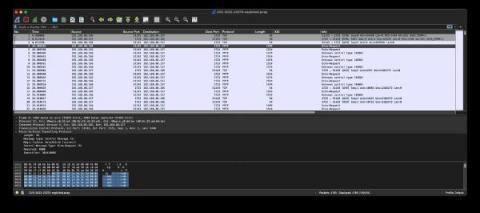
This month, Microsoft announced a vulnerability in PPTP, a part of the VPN remote access services on Windows systems that runs on port 1723/tcp. Through Microsoft’s MAPP program, Corelight Labs reviewed a proof of concept exploit for this vulnerability and wrote a Zeek®-based detection for it.
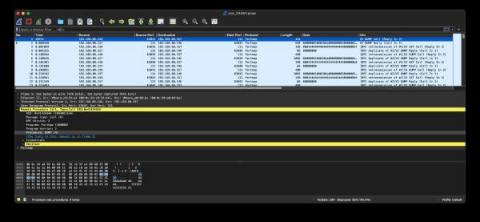
This month, Microsoft announced two vulnerabilities in portmap, which is part of ONC RPC, on Windows systems. This blog will discuss Zeek detection packages for CVE-2022-24491 and CVE-2022-24497 developed by Corelight Labs.
The Windows ‘Administrator’ account is a highly privileged account that is created during a Windows installation by default. If this account is not properly secured, attackers may leverage it to conduct privilege escalation and lateral movement. When this account is used for administrative purposes, it can be difficult to distinguish between legitimate and malicious activity.