Security | Threat Detection | Cyberattacks | DevSecOps | Compliance

6 must-haves in a remote patching solution

Somewhere in your fleet sits a laptop with a pristine, 100% compliance score. Not because it’s running the latest patches, but because it hasn’t talked to the server in three weeks, and a device that never checks in can’t exactly fail an audit, right? IT teams now manage more endpoints outside the office than inside it.


Patching at the Speed of Mythos

Can you move faster without risking downtime? Mythos is putting pressure on IT teams to patch in days, not weeks. But September's Patch Tuesday was a reminder that speed comes with its own risk: what happens when the patch you need to deploy quickly is the thing that causes an outage? In this session, we'll unpack what September taught us about faster patch cycles and look at how teams can shorten remediation timelines without giving up the testing and control that keep production running.

The Week Security Broke: Why Patching Can't Keep Up Anymore

In the span of a few days, we saw PHP2Shell, a set of critical remote code execution vulnerabilities in core PHP itself. That’s not in an application built on PHP, but in the engine that powers roughly 70% of the websites on the internet. Every PHP version released in the last decade was affected.

Bridging the Patch Gap: Stopping PHP2Shell and Zero-Days Before WAF Signatures Exist

On October 21, 2026, two critical vulnerabilities, PHP2Shell (CVE-2026-109618 and CVE-2026-109619), were publicly disclosed. Both are rated 9.2 and both allow remote code execution on vulnerable servers. Government portals, public services, and commercial sites across multiple countries went offline as a precaution while teams rushed to patch. But the flaws were known on October 20, and the patch didn’t ship until the 21st.

Before the PHP Patch: How BlueVoyant Turned Limited Warning into an Action Plan

An emergency vulnerability response begins before the patch arrives. On 20 October 2026, the PHP project announced two critical vulnerabilities, each rated CVSS v4.0 9.2, but withheld the technical details security teams would normally use to assess exposure. Organizations had a release window to prepare for, but no confirmed affected versions or attack vector.

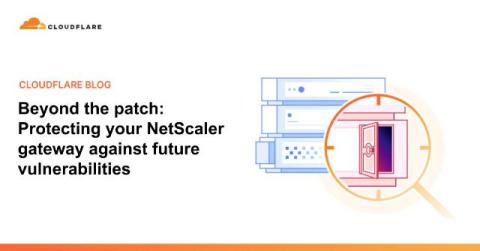
Beyond the patch: Protecting your NetScaler gateway against future vulnerabilities

The recent disclosure of a major vulnerability in Citrix NetScaler pointed to a widespread weak point: a login page is an attack surface that can be used to compromise and access an application server. Indeed, the disclosures included an actively exploited flaw that allowed attackers to execute commands on affected gateways without signing in. As with any emergency patch, admins had to weigh cutting off or disrupting their users’ access with the risk of delaying a critical security update.

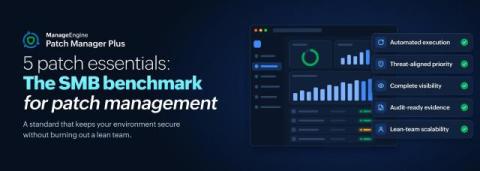
5 patch essentials: The SMB benchmark for patch management

If you're the entire IT team at your company, you probably wear more hats than your title suggests. Between helpdesk tickets, network maintenance, and strategic projects, patch management often gets pushed to the background—and it probably wins your attention only after an incident or an audit. The problem is, threats don't wait for a quiet day. New vulnerabilities are piling up and exploit windows are shorter than ever.
Featured Post

What happens when a patch can't wait until next Tuesday?

Most organisations patch on a schedule. For the majority of vulnerabilities, that makes sense. Updates need testing, maintenance windows need planning and nobody wants to cause an outage while trying to fix a security problem. But what happens when something can't wait? That's the bit I think organisations need to be looking at more closely, particularly as AI starts to change how quickly vulnerabilities can be found and analysed.

Zero Touch Patch Automation: Tanium Tech Talks #172

How do you patch faster - all while honoring your patching policies and *not* breaking things? Attackers are using AI to find and exploit vulnerabilities faster, and vendors are shipping patches faster too. Your patching processes need to keep up! In this episode we show how to automate patching on a monthly cadence, roll it out in rings, and keep control of the process the whole way through. zero-touch, ring-based patch automation with Tanium deployment plans, in Atlas or the classic console.