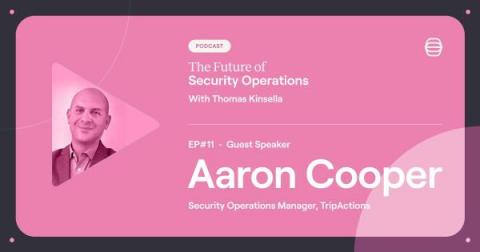
In our sixth episode of the Future of Security Operations podcast, Thomas speaks with Niall Heffernan, Head of Security at Cygnvs, a former Senior Manager of Information Security at Informatica, and a Lecturer for BSc, HDIP, PGDip, and MSc students studying in the Cybersecurity courses at the National College of Ireland.
One of the biggest decisions a rapidly evolving organization has to make when it comes to its IT infrastructure is whether to move to the cloud. At Tines, we love the cloud but understand that different security systems and environments require different deployment options. Some organizations need extra guardrails in place to access and manage their systems and data.
Software teams have focused on agility since the world embraced Mark Zuckerberg’s motto to “move fast and break things.” But many still lack the confidence or tooling to accelerate their processes. What’s more: in the race to release more, ship faster, and prioritize speed, many have neglected thoughtfulness and security – with Facebook itself becoming the poster child of data misuse.
Today’s developers move at increasingly rapid speed – making it more critical than ever to identify and resolve code vulnerabilities early in the software development lifecycle. By tackling security early – instead of waiting until testing and deployment – engineering teams can reduce unnecessary patching and maintenance cycles, reduce risks, and ensure timely delivery of new features.
In our fifth episode of the Future of Security Operations Podcast, Thomas speaks with Dylan White, an Information Security Engineer at KnowBe4 — a leading security awareness training platform.
Whether for managing remote teams, supporting ‘bring your own device’ (BYOD) policies, or simply another layer in a data protection strategy, services like Microsoft Intune offer greater control over the devices on your network. But using the data from these services often requires tedious prep work, and this process is likely repeated multiple times a week, if not daily. Tedious, repetitive, structured: these are all signs that a process can and should be automated.
The consensus on the state of cybersecurity professionals tends to fall somewhere between “burdened by high volumes of responsibility” and “dangerously understaffed and suffering from unhealthy levels of stress,” depending on how optimistic your source is.
No matter how advanced your Security Operations Center (SOC) is, pre-built Playbook Packs from Splunk can augment your analysts with automation that scales with your organization’s maturity. SplunkⓇ Enterprise Security (ES) users can achieve this scalable automation by using a pre-built Risk Notable Playbook Pack in Splunk SOAR.