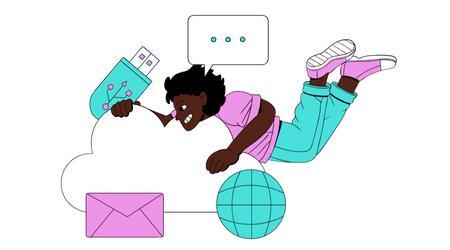
When 921 password attacks occur per second, it’s time to treat everyday employees’ credentials like the true operational risk they are. Today’s attackers assign a level of value to employees’ passwords they once reserved for privileged users’ credentials. Why? Workers now have a shocking amount of access to sensitive resources. I’ll elaborate… but through the perspective of a chief information officer kept up at night by risks.
Cyber attacks are targeted at significant organizations, and this week is an excellent reminder that medical facilities aren't safe. Along with AT&T and Minneapolis Schools, three different medical establishments were hit and suffered from a loss of information in one way or another. Zoll, a Medical device and technologies company suffered staggering losses, while Cerebral gave up mental health information and Lawrence General Hospital lost HIPAA-protected information.
Lawrence General Hospital is a private facility located in Lawrence, Massachusetts. The hospital is a non-profit organization and offers patients throughout the surrounding area a variety of services. A total of 189 beds are contained within the facility, and it maintains a staff of approximately 2,000 people while earning about $281 million in annual revenue. This large-scale hospital recently suffered from a serious cyber attack that exposed many of its patients.
The name Chaos is being used for a ransomware strain, a remote access trojan (RAT), and now a DDoS malware variant too. Talk about chaos! In this case, Sysdig’s Threat Research Team captured attacks using the Chaos variant of the Kaiji botnet malware. There is very little reported information on this malware since September 2022, perhaps because of the unfortunately chaotic naming, or simply because it is relatively new. Kaiji malware was of Chinese origin in 2020 and is written in Golang.
There’s an important shift happening in the cloud security industry: organizations are looking for an integrated platform that connects the dots between several key security use cases from source through production. Whether it is for tool consolidation, consistent end-to-end experience, or “one throat to choke,” customers are increasingly choosing a platform-based approach to address critical cloud security risks.
The software works as a spine for many organizations in every sector. It helps to boost their sales, meet objectives, increase revenue, and wider the user base. But, when it comes to securing it, most people configure authentication, access control, or similar traditional mechanisms. However, there’s a main concept that most developers don’t focus on. And that is Secure Software Development Framework.
At Detectify, we proudly maintain an AppSec perspective when it comes to how we handle security. But what does this mean exactly? In short, we think a lot about how both AppSec teams and developers will experience our platform and products. We know that today’s developers are feeling the pressure to get new code out to production to meet the demands of the business. These business demands have increased the need for AppSec tooling to leverage automation whenever possible.