Security | Threat Detection | Cyberattacks | DevSecOps | Compliance

How to Pick a Secure Minecraft Server Host

Most people pick a host on price and RAM. Security barely comes up, right up until somebody's world gets wiped. It happens more than you'd think. Weak panel logins, open ports, no backups, admin passwords that were never changed. None of that shows up on a sales page. Alright, so before you go picking a host, there are a few things worth checking. Some stuff looks great on the website but turns out pretty useless once you've actually paid. And yeah, there are a couple of things I'd stay away from completely.


5 PQC Remediation Platforms That Take Programs From Discovery to Done

Post-quantum cryptography programs can no longer stop at finding vulnerable encryption. Discovery is necessary, but discovery alone does not make an enterprise quantum-safe. Organizations still need to determine which cryptographic risks matter most, decide what should be migrated first, coordinate changes across application and infrastructure owners, select appropriate remediation strategies, validate that each fix worked, and maintain visibility as cryptography continues to change.

Modern Standards of LinkedIn Marketing for Sales Team Efficiency

LinkedIn has become the core B2B sales channel, but approaches to outreach have evolved. Generic mass messaging no longer yields results. Success now depends on precision, warm engagement, and safety. Sales teams require structured role distribution, multi-step personalization, and specialized tools to prevent duplicate outreach and account bans. To scale effectively without risking profiles, companies use reliable LinkedIn automation software for sales teams. Solutions like Linked Helper offer local desktop execution, smart human-like action imitation, and centralized workspaces.
Featured Post

Why Smarter Factories Can Create Greater Operational Risk

The manufacturing industry has undergone a remarkable transition. Factories that once relied on largely isolated systems and manual processes have evolved into highly connected environments, where cloud platforms, industrial technologies, data and third-party services work together to keep production moving. The benefits are clear, with greater connectivity helping manufacturers to increase efficiency and productivity, while better access to data gives teams the insights that they need to optimise operations and make faster, more informed decisions.

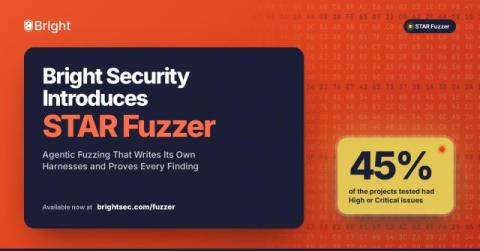
Bright Security Introduces STAR Fuzzer, Agentic Fuzzing That Writes Its Own Harnesses and Proves Every Finding

Built on an evolutionary engine first released in 2018, STAR Fuzzer by Bright Security finds crashes, memory exhaustion and memory-safety bugs in security-critical code without a running application. In its first open source research run, it found High or Critical issues in 45% of the projects tested, and in its first month of availability it produced ten published findings in eight projects, including the Crystal standard library, htop and RIOT OS.

Data Lineage for AI Agents: Takeaways From MIT Technology Review

Security teams built their controls around people, applications, devices, and networks. AI agents operate across all four at once. An agent can pull records from Salesforce, combine them with financial data, summarize the result with a language model, and post it to Slack, with no person touching any step. Each action may look permitted on its own, which means the risk sits in the sequence, and most tools can’t see the sequence.

[Cybersecurity Awareness Month] 100 Passwords, One Brain: Stop Asking Humans to Behave Like Machines

I want to start with a confession that most security leaders will recognize but few will say out loud: almost everyone reuses passwords. Not the reckless or the untrained. Everyone including, if we are honest, a fair number of people in our own profession. For years, our industry's response to this has been some version of finger-wagging. Use unique passwords, make them longer, add a symbol and change them every 90 days. Do not write them down.

What Is SOC (Security Operations Centre) and Does Your Business Need One?

A security operations centre (SOC) is the team that watches your systems around the clock and steps in when an attacker gets past your defences. Its job is to find intruders quickly and contain them before reaching anything critical. Few businesses have their own in-house SOC. Most get the same 24/7 cover from a managed SOC, run by a specialist provider. Either way, what happens in the first few hours of an attack determines how much damage is done.

Top-Down vs Bottom-Up Cyber Risk Quantification

Run both approaches against one company and the figures differ, which is expected. The useful part is that they differ in a predictable direction, which makes the distance between them informative rather than embarrassing. ‍ Bottom-up tends to come in lower and top-down higher, for reasons that follow from how each is built. Knowing which way each one leans is more useful than choosing between them. ‍