Security | Threat Detection | Cyberattacks | DevSecOps | Compliance

Simplify SOC Reporting with Customizable Dashboards

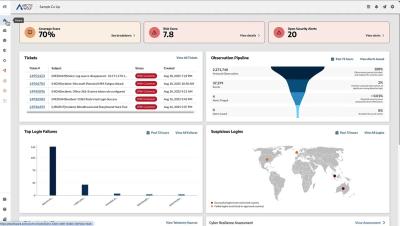
SOC teams often wrestle with clunky, siloed reporting tools that lack real-time, connected capabilities. Analysts end up buried under a mountain of fragmented xdata, forcing teams to spend valuable hours tracking down answers to their most pressing questions, rather than tackling threats head-on. At Torq, we feel SOC reporting should be your power move, not a painful process.

Cyber Risk Heats Up: 2025 Predictions for Australia

Mark Thomas, Director of Security Services for ANZ at Arctic Wolf, unravels the upcoming cyber security landscape in 2025. He outlines heightened risks due to geopolitical tensions and zero-day cyber attacks, the need for better protection of critical infrastructure, the impact of technology investment, and the importance of viewing cyber risk as business risk.

Why Cyber Insurance Is Vital To Keeping Businesses Standing When Threats Hit

Steve Hunter, Director of Sales Engineering at Arctic Wolf, discusses the importance of cyber insurance for organizations in mitigating cyber risks. He explains the types of coverage cyber insurance policies offer, the growing challenges in obtaining coverage, and the essential strategies for evaluating a policy. Steve also highlights the need for organizations to enhance their cybersecurity measures and how they can communicate effectively with insurers to improve their risk profile.

Maximizing AI Autonomy: Achieving Reliable AI Execution Through Structure and Guardrails

Gal Peretz is Head of AI & Data at Torq. Gal accelerates Torq’s AI and data initiatives, applying his deep learning and natural language processing expertise to advance AI-powered security automation. He also co-hosts the LangTalks podcast, which discusses the latest AI and LLM technologies. Our previous blog post explored how planning with AI systems can set the stage for smooth collaboration between humans and machines. However, a solid plan alone isn’t enough.

AI-Driven Case Management Built for the Modern Security Team

Case management for modern SOCs can be a maze of endless alerts, overwhelming data, and intense pressure. Legacy solutions often exacerbate these issues with rigid workflows, limited automation capabilities, and a lack of real-time adaptability, leaving teams ill-equipped to handle the growing complexity of threats. The volume of cases, manual workflows, and processes leave analysts overwhelmed, exhausted, and struggling to keep pace.

Impossible Travel Detection with Torq: Defend Against the Most Prominent and Expensive Breach

With widespread remote work and global access, organizations face mounting challenges in securing user identities against sophisticated threats. One critical identity risk signal is impossible travel, where a user appears to log in from two unrecognized, geographically distant locations within an unrealistic timeframe, indicating the possibility of compromised credentials or session hijacking.

Top 10 Ways Exabeam Support for OpenAPI Will Transform Security Operations

In the fast-evolving landscape of cybersecurity, interoperability and automation are the keys to staying ahead of ever-increasing threats. That’s why Exabeam support for the OpenAPI Specification (OAS) for its Security Orchestration, Automation, and Response (SOAR) capabilities, revolutionizing security operations. Exabeam New-Scale Security Operations Platform is the first SOC platform to support OAS.

Cut Through the Hype: Tips for Evaluating AI Solutions for an Autonomous SOC

As C-suites and boards are bombarded with headlines about AI revolutionizing cybersecurity, it’s no wonder they’re putting pressure on SOC leaders to adopt AI. The promise of AI in the SOC is rightfully alluring. An AI-native autonomous SOC has the potential to create a world where AI Agents collaborate with each other to take care of repetitive tasks and handle the majority of low-level alerts, freeing your human team up for strategic, proactive work. The hurdle?