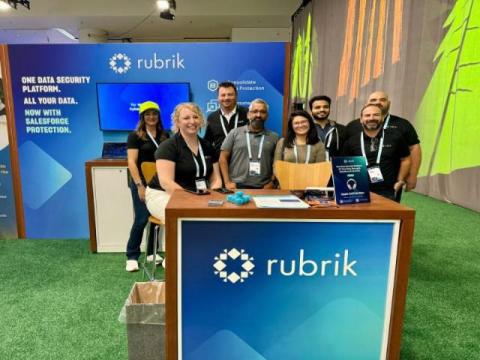
Ahead of Rubrik’s inaugural Healthcare Summit on September 12th, I thought it was appropriate to set the stage for what’s coming. Threat actors aren’t going to wait for you to get ready before they launch their attack. They’re banking on you not being able to recover your data—or not being able to recover fast enough—to maximize the damage they leave in their wake.
Security researchers have uncovered a novel and concerning method for cybercriminals to distribute malware using public code repositories. Known as "Revival Hijack," this technique involves the re-registration of previously abandoned package names on the PyPI repository. By taking advantage of the fact that PyPI allows the reuse of names from removed packages, attackers are able to slip malicious code into unsuspecting organizations.
This past summer was the first time I watched the Olympics since moving to the U.S. Besides appreciating the sheer greatness of the American Olympic spirit, there was also another thing that could not go missed - AI! Filling up every commercial slot seemed to be AI. And mainly, the commercials focused on harnessing AI for business productivity and operations. No matter your take on the greatest Olympic moment or greatest AI commercial, one could not overlook this overwhelming trend.
Trustwave SpiderLabs is prepped to launch its newest threat intelligence research, the 2024 Trustwave Risk Radar Report: Financial Services Sector. The upcoming report, which is set to be released on September 10, promises to be an indispensable resource for cybersecurity professionals. This comprehensive report not only sheds light on the modus operandi of a dominant ransomware gang but also delves into the persistent use of phishing and brute-force attacks to compromise credentials.
The Gen Threat Report, formerly known as the Avast Threat Report, has revealed a 100% increase in ransomware activity for the US, UK, and Canada; 66% in Australia; and a whopping 379% in India.
Initial Access Brokers (IABs) are threat actors who infiltrate networks, systems, or organizations and sell this unauthorized access to other malicious actors. Instead of executing the entire cyberattack, IABs focus on the initial breach and monetize it by selling access to compromised systems. They assist ransomware operations, particularly RaaS schemes, by streamlining attacks and reducing workload at the start.
Today’s blog installment brings us to the end of our 30-week journey that covered 30 cybersecurity topics that I felt would be of interest to a wide variety of security practitioners, such as Security Architects, Security Admins, and Security Auditors. I hope everyone found it as helpful as I found it to write. So, let’s move on with our last topic.