Security | Threat Detection | Cyberattacks | DevSecOps | Compliance

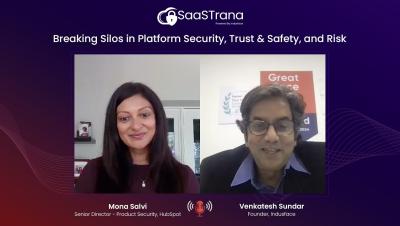
Merging WAF and IAM Capabilities for Next-gen Security | Scott Tomilson (Sr.Director, Ping Identity)

In this podcast, Scott Tomilson (Sr.Director, Ping Identity) talks with Venky about best practices for implementing Single Sign-On (SSO) in SaaS apps. He also discusses how applications are at risk due to humans, devices, and apps. And having behavioral-based anomaly scoring and security is the need of the hour.

How Corelight Transforms Data Security with Normalyze

When organizations need to know not only what type of malicious activity potentially occurred within their networks and clouds but also gather the remnants of that activity as evidence — they turn to Corelight. Corelight's customers include Fortune 500 companies, major government agencies, and large research universities. Based in San Francisco, this open-core security company was founded by the creators of the widely-used network security technology, Zeek.

The Need for More Cybersecurity Legislation

In this video, Keith Christie-Smith shares his opinion on the current state of cybersecurity legislation and why he believes that more legislation is necessary. He argues that there are still many verticals where more legislation is needed and that organizations should be mandated to apply the most stringent cybersecurity policies and frameworks available. He also discusses the importance of organizations doing as much as possible from a cybersecurity perspective to protect themselves and their clients.

Mend CLI

The Mend CLI tool is a great way to embed a Mend scan into any script, like adding it to your pipeline, because it runs and returns results directly in the command line. It can scan proprietary source code or open source libraries from the command line, and return known security vulnerabilities in the open source, or potential security issues in your proprietary code. This is an initial video overview of how to use the Mend CLI to scan your source code

CI Rewind - Historical Vulnerabilities in the Automotive Space

Join our CI Rewind and Learn how to Identify and Fix Common Bugs in Automotive Software In this replay of his talk at FuzzCon Europe - Automotive Edition 2022, CARIAD's Andreas Weichslgartner shows how contemporary software engineering can help to write more secure code and detect vulnerabilities already during development. He revisits historical vulnerabilities in the automotive space and take a look at common classes of bugs present in embedded software.

Patching Vulnerabilities Within 24 hours

The average time of vulnerabilities remain open is 180+ days from the time it is discovered. When it comes to business growth vs security, business always wins, which means vulnerabilities are not patched on time allowing hackers to exploit them. However, most of these can be patched using Virtual patching. That too within 24 hours and ZERO impact to business continuity.