Security | Threat Detection | Cyberattacks | DevSecOps | Compliance

How to choose the right privacy management platform: 5 questions to ask

Accelerating security solutions for small businesses‍ Tagore offers strategic services to small businesses. A partnership that can scale‍ Tagore prioritized finding a managed compliance partner with an established product, dedicated support team, and rapid release rate. Standing out from competitors‍ Tagore's partnership with Vanta enhances its strategic focus and deepens client value, creating differentiation in a competitive market.

UNM cyberattack diverts ambulances, disrupts care and raises HIPAA concerns

A cyberattack at the University of New Mexico Health Sciences Center did more than interrupt computers. It disrupted the systems that support emergency care and medical education, forcing operational changes that reached ambulances, patients, students and faculty. The incident is a reminder that in health care, a cyber event can become a patient-care and business-continuity crisis within minutes.

Top 10 CTI Tools for Dark Web Monitoring in the UK 2027

This post lists ten cyber threat intelligence tools UK organisations use to watch the dark web for leaked credentials, stolen data and threats aimed at them. It explains what dark web monitoring does, how to pick a tool, and why an analyst-led UK provider like CYJAX gives security teams context, not just alerts.

CVE-2026-97229: Alpine Linux GitLab Security Incident

A critical vulnerability in GitLab’s CI/CD processing became the focus of an attempted intrusion against Alpine Linux’s development infrastructure in October 2026. The incident prompted an extensive investigation, infrastructure rebuild and credential reset, despite the absence of confirmed remote code execution. What makes this case particularly important is not only the exploitation attempt itself, but a security issue discovered during remediation.

Your Artifactory is fine. Your Linux kernel hosting it might not be.

Summary As we’ve written, AI is shrinking the time between “a fix is public” and “someone has a working exploit” to near-zero. JFrog products are not affected by Linux kernel CVE-2026-98432. Artifactory, Xray, and the rest of the JFrog Platform do not contain this flaw, as it lives in the Linux kernel itself.

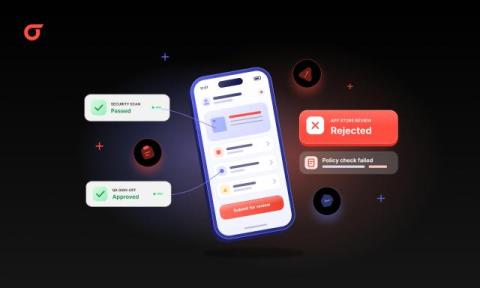
Why Your App Passes Security Testing but Gets Rejected at the Store

A security scan and an app store review ask different questions. Here's why app store rejection happens to secure builds, and what enterprise mobile teams check before they submit. Your build passed binary SAST. DAST ran clean on real devices. QA signed off, and the launch date went out to customers. Then the store console said no. Nothing in the security report was wrong. It was answering a different question.

PII and third-party apps: Don't trust, verify

You have likely heard the old Russian proverb: “доверяй, но проверяй.” It means “trust, but verify,” and it used to be a standard within the InfoSec community for decades. Slowly, many organizations have moved their infrastructure toward a Zero Trust Architecture, which has helped improve security postures further. But even still, unearned and unverified trust is rampant.

Known Exploited Means Your Mitigation Is Next

Last month, the FBI arrested a suspect in its ongoing response to an attack on its job portal, allegedly carried out by criminal hacker and extortion group ShinyHunters. The agency said a contractor failed to apply a security patch to a third-party platform involved in the breach of its job portal, while Reuters reported that the contractor worked for Accenture and that the platform was Oracle PeopleSoft. (Fair warning: The Reuters article is behind a paywall.)

What Makes a Good Security Agent? 5 Lessons from the AgentWorks Hackathon

Every security team is being told to adopt AI. Far fewer have been shown what "good" looks like in practice. Turnkey agents handle common, well-defined security tasks, but no two security teams operate the same way. Each has its own data, playbooks, escalation paths, and risk tolerances; unique context that no vendor can anticipate in a packaged solution.

How much AI risk is acceptable? The compromise infrastructure leaders shouldn't have to make

Spend any time with senior infrastructure and IT leaders right now and one conversation keeps coming up. The business wants AI, and increasingly it wants agentic AI: systems that don’t just recommend an action but take it. Boards have seen the productivity numbers. Competitors are announcing pilots. The pressure to move is real. At the same time, those same leaders own the risk register. They answer to regulators, auditors, and, when something goes wrong, the front page.