Security | Threat Detection | Cyberattacks | DevSecOps | Compliance

Tired of Security Alert Fatigue? Stop Burnout with Hyperautomation

Every day, analysts are buried under a mountain of low-value and often meaningless alerts. And they’re expected to triage, investigate, prioritize, and respond to all of them — faster, better, and with fewer people. With this comes cybersecurity alert fatigue, which can lead to missed threats, slower response times, and SOC analyst burnout. The good news is that SOC analysts don’t have to live like this anymore. Not if you have the right kind of AI working for you.

Understanding the NCSC's New API Security Guidance

Legislative, regulatory, and advisory bodies the world over are waking up to the importance of API security. Most recently, the UK’s National Cyber Security Centre (NCSC) has published detailed guidance on best practices for building and maintaining secure APIs. In this blog, we’ll break down that guidance and explore how Wallarm’s platform can help you align with each one.

How IT Admins Can Use Keeper To Onboard and Offboard Employees Securely

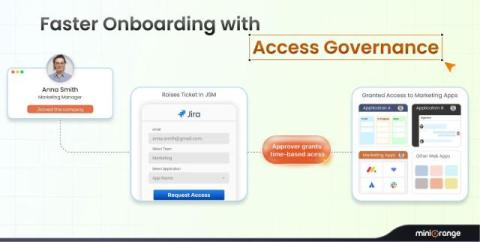
IT teams face increasing pressure to onboard new employees and offboard departing ones quickly and without compromising security. Granting users access to necessary tools is crucial for business productivity, but without strong access controls, organizations risk suffering from data breaches, compliance issues and privilege misuse. In fact, Keeper Security’s The Future of Defense Report found that 40% of respondents have experienced a cyber attack caused by an employee.

Navigating DORA: Key Considerations for the Financial Sector

It is no secret that the financial industry is a serious target for cyber criminals, driving the need for more stringent regulations to help protect these institutions and their employee and customer data. Recent research undertaken by Security Scorecard indicates that in 2023, 78% of European financial institutions experienced a data breach involving a third party. Also, 84% of financial organisations have been affected by a breach involving a fourth party.

9 Key Fators to Consider When Choosing a PAM Solution

Choosing a privileged access management (PAM) solution isn’t just a technical decision — it’s a strategic one. Selecting the right PAM platform is essential for securing your IT infrastructure, ensuring audit readiness, and minimizing business risks. But with so many tools claiming to offer comprehensive protection, how do you separate the truly effective ones from the rest? This article breaks down the nine most important factors to consider when choosing a PAM solution.

Understanding Attack Surfaces: What They Are and Why They Matter

In today’s digital environments, where cloud infrastructure, remote work, and third-party tools are the norm, the number of ways attackers can reach your systems are infinite. These potential entry points make up your attack surface. Understanding it is the first step toward defending it. As companies adopt more cloud services, mobile endpoints, and third-party apps, attack surfaces continue to grow — making visibility and management more critical than ever.

Empowering Telco Cloud Transformation with SUSE and Trilio

Telecommunication providers are rapidly embracing technologies like 5G, edge computing, Open RAN, and AI-driven automation. Yet, as innovation accelerates, data protection remains a crucial concern. The adoption of cloud-native architectures—especially Kubernetes—demands modern solutions that ensure data resilience, scalability, and operational continuity.

Granular Recovery Technology in Kubernetes and OpenShift

Kubernetes disasters require precision recovery solutions, not full system restorations that waste valuable time. Granular recovery technology allows IT teams to extract and restore specific files, objects, or application components from backups while leaving everything else intact. Taking a targeted approach reduces downtime from hours to minutes for organizations running critical workloads on Kubernetes and OpenShift platforms.

Zero Trust Isn't Enough: Here's How to Validate It and Prove Resilience

Authors: Tova Dvorin, Senior Product Marketing Manager | Adrian Culley, Senior Sales Engineer You’ve implemented Zero Trust. You’ve rolled out segmentation, multi-factor authentication (MFA), and policy enforcement. Your dashboards are full. But when the Board asks: —you hesitate. You’re not alone.