Security | Threat Detection | Cyberattacks | DevSecOps | Compliance

What APQP Training Does for Manufacturing Teams

Most product failures are not born on the factory floor; they are baked in long before, during planning. A missed tolerance, an untested assumption, or a supplier risk nobody flagged becomes a costly recall months later. Advanced Product Quality Planning exists to catch those problems before a single part is made.

Why DevSecOps Teams Are Adopting an AI Pentesting Solution

Software teams today are shipping code faster than ever before. New features go live weekly, sometimes daily, and the pressure to stay ahead of competitors means security can no longer be treated as a final checkpoint before release. This shift has pushed DevSecOps teams to rethink how they test for vulnerabilities.

Passkeys vs. passwords: The authentication cage match nobody asked for

First things first, let’s be honest about one thing: passwords are terrible. Yet, here we are in 2026, still filling up our password fields with trivial stuff like P@ssw0rd123! and pretending we're being secure. And of course, we reuse the same password everywhere: We scribble it on a sticky note and display it on our cubicle wall for the world to see. But even then, we still forget what it was. So we smash that Forgot Password link so often, we might as well have it bookmarked.

December 2026 Is Closer Than You Think: What the UK's Defence Cyber Directive Means for Your Organisation

The UK’s Ministry of Defence has sent a clear message to organisations within the Defence supply chain. By 31 December 2026, all Defence industry partners are expected to achieve Defence Cyber Certification (DCC) Level 0, including Cyber Essentials for all applicable business-critical systems within scope. This represents a significant step in strengthening cyber resilience across the Defence ecosystem and raising the baseline for cyber security throughout the UK’s supply chain.

How to prevent chaos in the Microsoft AD estate: A quick-start guide to reduce risk and administrative burden in medium-sized regulated businesses

If you work in IT for a medium-sized regulated business, you already know the truth: Your Microsoft environment didn’t become sprawling overnight. It grew through mergers, acquisitions, divestitures, reorganizations and the natural evolution of a business that’s constantly adapting. Every new business unit brought its own domain. Every acquisition added another tenant. Every project introduced new accounts, groups and privileges.

KuppingerCole names One Identity a leader in non-human identity management (NHIM)

Non-human identity management (NHIM) is the governance and security of machine, application, and service identities through standardized authentication, authorization and lifecycle controls. These identities often have elevated privileges, making them prime targets for exploitation, especially when left unmanaged. Effective NHIM reduces risk, strengthens compliance and ensures operational resilience. KuppingerCole notes:“One Identity solutions address all major NHIs.

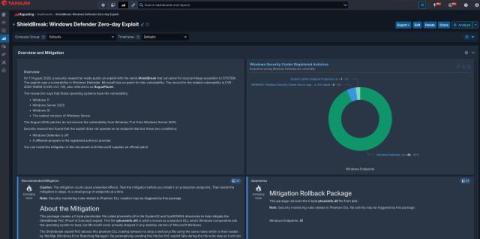
Hunt or be Hunted: ShieldBreak Zero-Day

On August 11, 2026, a security researcher publicly released a proof-of-concept called ShieldBreak, a full bypass of Microsoft’s own July patch (RoguePlanet) for a Windows Defender privilege-escalation flaw, with a reported 100% success rate against Windows 11 25H2 and Windows Server 2025. No vendor fix existed for the bypass. The only real defense was whoever moved first.

What's new in Tines: August 2026 edition

More teams are building Apps in Tines Stories to deliver their most important work. This month, you can connect Apps to your Tines data, assign clear ownership, and share view access through your identity provider. Bring your data directly into an app. Apps can now read cases, records, and resources through built-in Workbench functions, so you spend less time configuring Workbench tools and building endpoints to interact with your data..

Magento Zero-Day: Unpatched Adobe Commerce RCE Is Backdooring Online Stores

On 4 September 2026, attackers began exploiting an unpatched remote code execution flaw in Magento Open Source and Adobe Commerce. Dutch e-commerce security firm Sansec disclosed the issue on 5 September and named it StyleSmuggler. The company said it published early because stores were being compromised in real time.