Essential reading for developers and security professionals alike: a comprehensive comparison of vulnerability databases to help you cut through the noise.
Another day, another API breach in the news. The latest breach occurred on the Life360 platform where an advisory was able to gleam 400k user phone numbers, based on the article written on Bleepingcomputer.com. Known only by their 'emo' handle, they said the unsecured API endpoint used to steal the data provided an easy way to verify each impacted user's email address, name, and phone number.
Enterprise identity and access management (IAM) is the discipline of managing digital identities and their access to data, applications, systems and other resources. It addresses two fundamental questions: In other words, IAM helps organizations ensure that exactly the right accounts exist and that each user can access exactly the right resources based on their job functions. This article explores the benefits of enterprise IAM, the challenges involved and the key features to look for in an IAM solution.
Your organization deals with various forms of sensitive information. It could be company secrets, customer data, or proprietary research — whatever the case, security should be your top priority. This is especially true given the heightened security concerns worldwide, with malicious actors targeting businesses everywhere. As such, you must protect your business’s interests and comply with regulatory requirements for data protection.
Breaking into an organisation’s IT infra doesn’t always require complex methods. Hackers often exploit normal applications and API functions in unexpected ways to access sensitive data. For example, the 2019 Venmo breach involved the exploitation of an open API to scrape millions of payment records. A design oversight in the API allowed attackers to exploit its normal functions in an unintended manner—scraping payment records without proper authorization.
Tl;dr: The Shadow IT report, conducted in late 2023, shows that 47% of companies allow employees to access their resources on unmanaged devices, authenticating via credentials alone.
Phishers are in the business of deception. They trick unsuspecting individuals into compromising sensitive data, potentially bringing an entire organization to its knees. Awareness training for employees is one of the most important tools a company can use in its anti-phishing strategy. However, it also has its downsides. Some of these flaws can, and should be fixed. Others leave no choice but to complement training with additional anti-phishing tools.
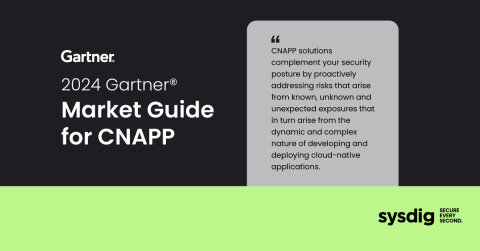
As organizations continue to look for consolidated platforms to address their security needs, an important shift has happened. Customers have discovered that traditional tools focusing exclusively on static risks (such as misconfigurations, policy/control failures, and network exposure) are not enough to address today’s dynamic cloud threats.
Technological advances in how we create and consume media have repeatedly transformed how election campaigns are fought: social media, TV and radio were all revolutions in their times.There have always been concerns about the impact these new technologies would have on democracy: the Milwaukee Journal worried following the first televised presidential debate, in 1960, that “American Presidential campaigning will never be the same again.” Perhaps they were right…
Elastic Security has exceptionally powerful capabilities that surpass those of smaller vendors Elastic Security has achieved remarkable results in the recent AV-Comparatives Business Security Test, ranking in the top five with other notable security vendors. Elastic Security was identified as being in the larger end of the market and offers exceptionally powerful tools with capabilities that surpass those of smaller packages.