
Security | Threat Detection | Cyberattacks | DevSecOps | Compliance

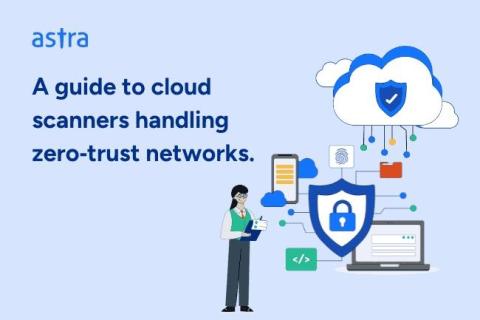
How do Cloud Scanners Handle Zero Trust Security?

The global zero trust security market was valued at USD 19.2 billion in 2024 and is expected to grow at a CAGR of over 17.4% between 2025 and 2034, driven by rising cybersecurity threats. This explosive growth is a direct reflection of the fundamental change in how organizations think about security.


Rethinking the Identity Stack: Why Modern PAM Is Essential

As enterprises scale their infrastructure across on-premises, hybrid and cloud environments, traditional Identity and Access Management (IAM) tools are struggling to keep up. Legacy Privileged Access Management (PAM) platforms were built to support static infrastructures and were not designed for today’s multi-cloud environments. They have been shown to increase complexity, create gaps in security coverage and cause significant budget strain.

GPT5 Pulls Ahead on Secure Code While Rivals Stall

AI coding assistants are evolving quickly. But are the latest models any better at writing secure code? Our October 2025 analysis brings fresh data on how newer large language models (LLMs) stack up against their predecessors, and the results reveal both progress and persistent gaps. This update builds on our July 2025 GenAI Code Security Report, which tested over 100 LLMs across four major programming languages.

How Outpost24 delivers operational resilience for DORA

The EU’s Digital Operational Resilience Act (DORA) has just turned a year old. This regulation represented a fundamental shift in how the financial sector manages ICT risk, moving beyond traditional compliance to demand continuous, demonstrable digital operational resilience. A year on, the focus has changed. Organizations can no longer just avoid cyber incidents. They need to prove they can withstand, respond to, and recover from disruptions quickly and effectively.

How Organisations Can Prevent Phishing and Stop Modern Attacks

Phishing continues to be the most common way attackers gain initial access. If you want to prevent phishing in your organisation, it starts with understanding how these campaigns suceed and why they continue to bypass traditional controls. Drawing on insights from our recent webinar Red Team Insights: What We’ve Learned from Breaching the Best, this article explores the tactics attackers rely on and the steps security teams can take to strengthen their defences.

Egnyte Collaborates With Microsoft to Power Enterprise AI With Microsoft Agent 365

Egnyte is excited to announce a new collaboration with Microsoft, integrating Egnyte’s data governance and secure collaboration expertise with Microsoft Agent 365 for AI agents. This collaboration is designed to transform how organizations empower their employees, enhancing productivity and decision-making through secure, governed AI. The enterprise landscape is rapidly evolving.

Supply Chain Cybersecurity Strategies for Modern Business

The widening attack surface signals a critical risk, and your supply chain is the prime target. Attackers exploit vulnerabilities that were inserted long before the system was onboarded. This enables them to infiltrate data or disrupt systems at any stage, making supply chain attacks a direct and growing risk. A third-party breach compromises your vendor, but a supply chain attack targets you, which is why organizations need to make supply chain cybersecurity a business priority.

Risk Automations: The Shift From Catch-Up to Command

What if your security operations team could reduce the time from risk discovery to resolution, from hours to seconds? 64% of analysts spend more than half of their time on manual tasks. It’s a sobering reality, considering how accelerated detection has become, and the contrast couldn’t be sharper. There are tools that detect zero-day vulnerabilities, map complex attacks, and identify vendor risk exposures, but remediation is still stuck in the age of manual mitigation.

Lookalike Domain Attacks Explained

Your potential customers could be interacting with a malicious website that resembles your company's website. This dangerous cyber risk, known as a lookalike domain, is on the rise, with 80% of registered web domains in 2024 resembling 2000 global brands. This article explains what lookalike domains are, their impact on your brand, and why these attacks are increasing, providing real-time strategies to protect your business from domain spoofing.

Crowdsourced Penetration Testing: Understanding the Risks for Better Decision-Making

Crowdsourced penetration testing promises broad coverage, flexible resourcing, and cost efficiency by tapping into a distributed pool of security testers. Trustwave, A LevelBlue Company, realizes not every organization has the financial resources to partner with a security firm with dedicated penetration testing capabilities. At the same time, we want to make organizations aware of the many pitfalls in the crowdsourced pen-testing market and offer a few pointers on choosing the right vendors.