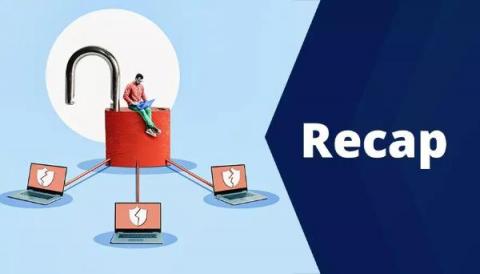
Trust is a serious issue facing enterprise architectures today. Legacy architectures are designed on implicit trust, which makes them vulnerable to modern-day attacks. A Zero Trust approach to security can remedy this risk, but transitioning isn’t always easy or inexpensive. CISA, the US government’s Cybersecurity and Infrastructure Security Agency, suggests a five-pillar model to help guide organizations to zero trust maturity.
Generative Artificial Intelligence (AI) has revolutionized various fields, from creative arts to content generation. However, as this technology becomes more prevalent, it raises important considerations regarding data privacy and confidentiality. In this blog post, we will delve into the implications of Generative AI on data privacy and explore the role of Data Leak Prevention (DLP) solutions in mitigating potential risks.
Netskope Threat Labs publishes a monthly summary blog post of the top threats we are tracking on the Netskope platform. The purpose of this post is to provide strategic, actionable intelligence on active threats against enterprise users worldwide.
I remember when the first iPhone was announced in 2007. This was NOT an iPhone as we think of one today. It had warts. A lot of warts. It couldn’t do MMS for example. But I remember the possibility it brought to mind. No product before had seemed like anything more than a product. The iPhone, or more the potential that the iPhone hinted at, had an actual impact on me. It changed my thinking about what could be.
For all the recent focus on artificial intelligence and its potential for deepfake impostures, the boiler room is still very much active in the criminal underworld. WIRED describes the ways in which people in many parts of the world (Ireland, France, Nigeria, and Mexico) have been recruited to work as freelancers for a company that seeks to profit from lonely people looking for love. This is how a typical operation runs.
Whether it’s an employee’s personal laptop, cloud storage, or thumb drive or any one of a countless number of software applications, shadow IT is a constant threat for any IT department.
Earlier this year, we released a report on the top 10 open source vulnerabilities from data based on user scans — giving you an inside look into the most common (and critical) vulnerabilities Snyk users found in their third-party code and dependencies. Building on this trend, we decided to look into the most common vulnerabilities in first-party code. While OWASP served as a guiding light for open source security intel, gathering data on proprietary code was a bit more complex.